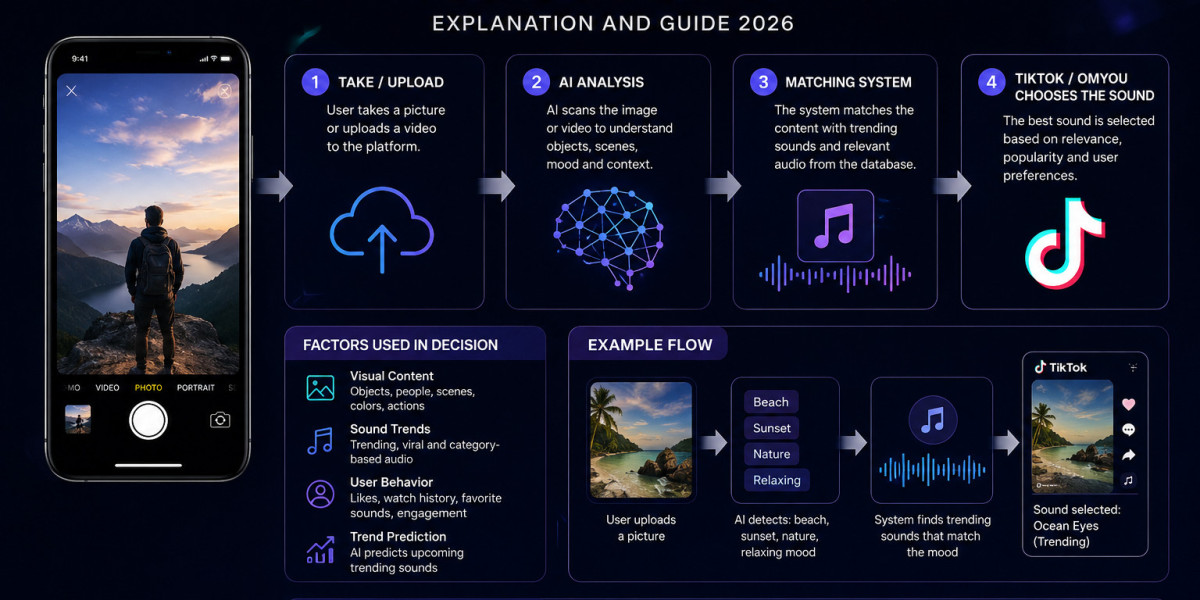

In this article, we will explain how this process works, why it exists, and what technologies are involved behind the scenes.
What Actually Happens When You Take a Picture or Upload a Video
When a user captures a photo or uploads a video, the platform does not simply store the file and stop there. Instead, the system immediately begins analyzing the content.
This process usually includes:
- Uploading the image or video to the server
- Running visual analysis using AI models
- Detecting objects, faces, scenes, and context
- Matching the content with a database of trending audio
- Selecting a suitable sound based on relevance and popularity
The goal is to make the content more engaging without requiring the user to manually search for music.
How TikTok Chooses the Sound
Platforms such as TikTok use a combination of artificial intelligence and recommendation systems to select audio tracks.
1. Content Recognition Technology
The system analyzes visual data from the uploaded content. This includes:
- Object detection (for example, food, people, nature, city scenes)
- Facial expression analysis
- Scene classification (indoor, outdoor, night, daylight)
- Motion detection in videos
This allows the system to understand the “theme” of the content.
2. Audio Recommendation Engine
After identifying the content type, the system matches it with audio from a large database. This database includes:
- Trending sounds
- Viral music clips
- Category-based audio (travel, food, lifestyle, emotional, etc.)
- Region-specific popular sounds
The system prioritizes sounds that are currently gaining high engagement.
3. User Behaviour Data
Another important factor is user behavior. The platform tracks:
- Videos the user watches frequently
- Sounds the user interacts with
- Content categories the user prefers
- Engagement patterns (likes, shares, watch time)
This helps personalize sound selection for each user.
4. Trend Prediction System
Modern platforms also use predictive algorithms to identify upcoming trends. Instead of only recommending currently popular sounds, the system may suggest:
- Newly rising audio clips
- Sounds gaining fast engagement
- Region-based viral trends
This helps content creators stay ahead of trends.
How Omiyou Uses Similar Technology
If a platform like Omiyou implements this type of feature, it is likely using a similar system structure:
- AI-based image or video analysis
- Content tagging system
- Recommendation engine for media pairing
- Integration with trending audio datasets or APIs
The main objective is to automate content enhancement and improve user experience by reducing manual effort.
Why This Feature Exists
There are several reasons why platforms implement automatic sound selection:
1. Improve User Experience
Users do not need to search manually for suitable audio.
2. Increase Engagement
Content with well-matched sound tends to perform better.
3. Encourage Content Creation
Simplifying the process makes it easier for beginners.
4. Boost Viral Potential
Trending sounds increase the chance of content being discovered.
Limitations of Automatic Sound Selection
Although useful, this system is not perfect. Some limitations include:
- Sound may not always match the content perfectly
- Cultural or contextual mismatch can occur
- Algorithm may prioritize trends over relevance
- User preference may differ from AI suggestion
Because of this, most platforms still allow manual sound selection.
The Technology Behind It
The core technologies used include:
- Computer Vision (for image and video recognition)
- Machine Learning (for pattern detection and prediction)
- Recommendation Systems (for personalized suggestions)
- Big Data Analytics (for tracking trends and behavior)
These technologies work together in real time to analyze and respond instantly.
The “automatic sound selection” feature in platforms like TikTok and potentially Omiyou is not random. It is the result of advanced AI systems that analyze content, track trends, and personalize recommendations based on user behavior.
As these technologies continue to improve, we can expect even more accurate and intelligent content pairing systems in the future.