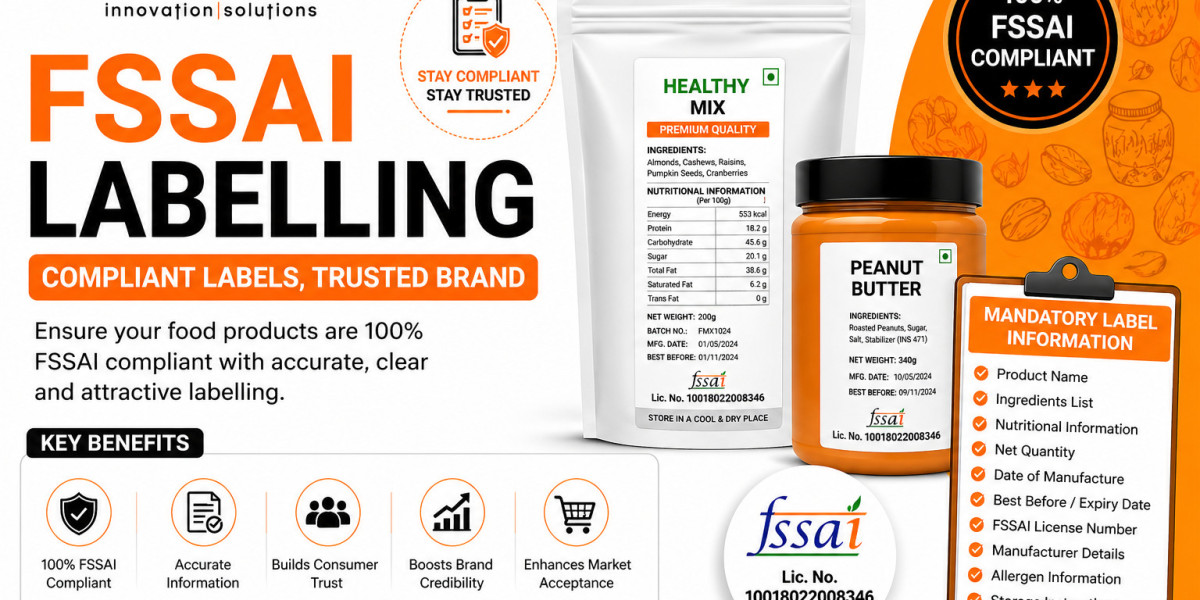

In today’s competitive food industry, FSSAI labelling plays a crucial role in ensuring consumer safety, regulatory compliance, and brand transparency. Whether you are a startup, manufacturer, or established food brand, understanding labelling norms is essential to avoid legal issues and build trust with your customers. Proper labelling not only communicates product information but also reflects your commitment to quality and safety standards.
What is FSSAI Labelling?
FSSAI labelling refers to the mandatory guidelines set by the Food Safety and Standards Authority of India (FSSAI) for packaging and labelling of food products. These regulations ensure that consumers receive accurate and clear information about the product they are purchasing. From ingredient details to nutritional facts, every packaged food item must comply with these norms.
Why is FSSAI Labelling Important?
Food labelling is more than just a legal requirement—it directly impacts consumer decisions. Here’s why it matters:
Consumer Awareness: Provides essential information like ingredients, allergens, and nutritional value
Legal Compliance: Helps businesses avoid penalties and product recalls
Brand Credibility: Builds trust and transparency among customers
Market Access: Ensures smooth entry into retail and export markets
Ignoring labelling regulations can result in heavy fines or even product bans, making compliance non-negotiable.
Mandatory Requirements Under FSSAI Labelling
Every packaged food product in India must include the following details:
1. Product Name
The name should clearly define the nature of the food product.
2. List of Ingredients
Ingredients must be listed in descending order by weight or volume.
3. Nutritional Information
Includes details like:
Energy (kcal)
Protein
Carbohydrates
Sugar
Fat
4. Veg/Non-Veg Logo
A green dot indicates vegetarian food, while a brown dot represents non-vegetarian food.
5. FSSAI License Number
A unique 14-digit number that confirms the business is registered with FSSAI.
6. Manufacturer Details
Name and complete address of the manufacturer or marketer.
7. Net Quantity
The weight or volume of the product must be clearly mentioned.
8. Date Marking
Includes:
Manufacturing date
Expiry date or “Best Before”
9. Allergen Declaration
Mandatory disclosure of common allergens like nuts, milk, gluten, etc.
10. Storage Instructions
Specific instructions for maintaining product quality.
Common Mistakes to Avoid
Many food businesses unintentionally violate regulations due to lack of awareness. Here are some common errors:
Missing or incorrect FSSAI license number
Improper font size or unreadable text
Incorrect nutritional values
Misleading claims like “100% natural” without proof
Not updating labels after recipe changes
Avoiding these mistakes is essential to maintain compliance and avoid penalties.
Role of FSSAI Labelling in Branding
Beyond compliance, FSSAI labelling can also enhance your brand image. A well-designed label with accurate information helps:
Improve shelf appeal
Communicate brand values
Influence buying decisions
Differentiate your product from competitors
Modern consumers are highly conscious about what they eat, and transparent labelling can give your brand a competitive edge.
Recent Updates in FSSAI Labelling Regulations
FSSAI frequently updates its guidelines to improve food safety standards. Some recent trends include:
Front-of-pack labelling for better visibility
Stricter rules on health claims
Emphasis on clean and transparent ingredient lists
Mandatory declaration for added sugar and trans fats
Businesses must stay updated with these changes to ensure ongoing compliance.
How to Ensure Compliance?
To meet all regulatory requirements, food businesses should:
Conduct label audits regularly
Work with professional consultants
Stay updated with FSSAI notifications
Use accurate labelling software/tools
Validate nutritional information through certified labs
Professional guidance can significantly reduce the risk of non-compliance and save time.
Benefits of Proper FSSAI Labelling
Implementing correct labelling practices offers multiple advantages:
Builds consumer trust
Enhances product credibility
Reduces legal risks
Improves market reach
Supports export opportunities
A compliant label acts as a silent salesperson, conveying important product details at a glance.
FAQs on FSSAI Labelling
1. Is FSSAI labelling mandatory for all food products?
Yes, all packaged food products sold in India must comply with FSSAI labelling regulations.
2. What happens if my product label is non-compliant?
Non-compliance can lead to penalties, product recalls, or even cancellation of your FSSAI license.
3. Can I update my label after product launch?
Yes, but you must ensure that updated labels meet all regulatory requirements before distribution.
4. Is nutritional information compulsory?
Yes, nutritional labelling is mandatory for most packaged food products.
5. Do small businesses also need to follow these rules?
Yes, both small and large food businesses must comply with FSSAI labelling norms.
Conclusion
In conclusion, FSSAI labelling is a critical aspect of running a successful and compliant food business in India. It ensures transparency, protects consumers, and strengthens your brand’s credibility in the market. Foodsure following proper guidelines and staying updated with regulations, businesses can not only avoid legal issues but also gain a competitive advantage in the ever-growing food industry.