
Introduction
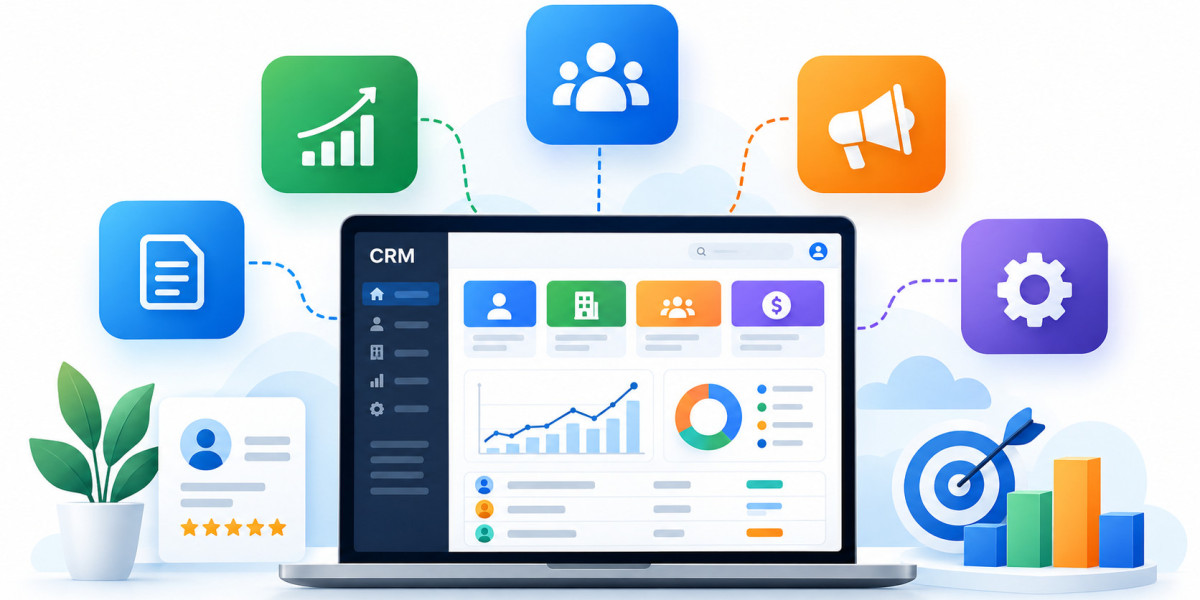
Implementing Customer Relationship Management (CRM) software is an important step toward improving customer engagement and operational efficiency.
However, simply purchasing a CRM platform does not guarantee better business results.
Organizations often face challenges such as inconsistent customer data, low user adoption, disconnected applications, complicated workflows, and limited reporting visibility.
These issues can prevent businesses from realizing the full value of their CRM investments.
Following proven CRM best practices helps organizations build a more reliable, efficient, and scalable customer relationship management environment.
In this guide, we will explore 12 CRM best practices that can help businesses improve CRM adoption, streamline processes, maintain data quality, and support long-term growth.
What Are CRM Best Practices?
CRM best practices are recommended strategies and processes that help businesses implement, manage, and optimize customer relationship management systems effectively.
They cover areas such as CRM planning, data management, workflow design, employee training, security, reporting, and continuous improvement.
The objective is to ensure that CRM software supports business goals while providing employees with reliable information and practical tools.
12 CRM Best Practices for Business Success
1. Define Clear CRM Goals
Before implementing or optimizing a CRM system, businesses should establish measurable objectives.
These might include improving lead response times, increasing CRM adoption, reducing duplicate records, or improving sales forecasting accuracy.
Clear goals help organizations identify relevant CRM features and measure implementation success.
Best practice: Establish baseline metrics and define how progress will be evaluated.
2. Understand Your Business Processes
CRM technology should support business operations rather than introduce unnecessary complexity.
Organizations should document their existing sales, marketing, and service workflows before configuring the system.
This process helps identify repetitive tasks, approval requirements, communication gaps, and opportunities for automation.
Best practice: Map current workflows and design improved processes before making major CRM configuration changes.
3. Maintain Accurate CRM Data
Data quality is essential for effective customer relationship management.
Incomplete, outdated, or duplicated customer records can affect reporting, sales activities, and customer communication.
Businesses should establish data entry standards, validation rules, and regular data review procedures.
Best practice: Assign data ownership and schedule recurring checks for duplicates, incomplete fields, and outdated information.
4. Encourage CRM User Adoption
Even a technically successful CRM implementation can underperform when employees do not use the system consistently.
Organizations should involve users during planning, provide role-specific training, and simplify common workflows.
CRM interfaces and processes should be designed around the tasks employees perform regularly.
Best practice: Collect employee feedback and monitor usage patterns to identify adoption challenges.
5. Automate Repetitive CRM Tasks
Automation can reduce manual work and improve consistency across business processes.
Businesses can automate lead assignment, follow-up reminders, task creation, notifications, and selected record updates.
However, excessive automation can create confusion and make systems difficult to maintain.
Best practice: Start with high-volume, clearly defined processes and measure results before expanding automation.
6. Integrate CRM with Business Applications
Disconnected systems can lead to inconsistent information and duplicate work.
Integrating CRM software with marketing platforms, ERP systems, communication tools, and other applications can improve information sharing.
Integration planning should address data ownership, synchronization frequency, error handling, and access permissions.
Best practice: Prioritize integrations that eliminate significant manual effort or improve essential business workflows.
7. Use CRM Reporting and Analytics
CRM dashboards help businesses understand performance and identify operational challenges.
Organizations can track metrics such as lead conversion rates, sales pipeline value, opportunity aging, customer response times, and service resolution performance.
Reports should be tailored to the needs of different teams and decision-makers.
Best practice: Review CRM metrics regularly and use findings to guide operational improvements.
8. Establish CRM Security and Governance
Customer data requires appropriate protection and oversight.
Businesses should implement access controls, authentication policies, audit capabilities, and data handling procedures based on their requirements.
User permissions should reflect job responsibilities and follow the principle of least privilege.
Best practice: Conduct periodic access reviews and document processes for approving significant CRM changes.
9. Personalize Customer Communication
CRM information can help businesses deliver more relevant interactions.
Teams can use customer preferences, purchase histories, service records, and previous communications to better understand customer needs.
Personalization should respect privacy preferences, applicable laws, and communication consent requirements.
Best practice: Use accurate, permissioned customer data to improve communication relevance without overwhelming customers.
10. Review and Optimize CRM Workflows
Business processes change over time, and CRM configurations should evolve accordingly.
Organizations should periodically review automation rules, sales stages, dashboards, integrations, and customizations.
Unused features and outdated workflows may increase maintenance complexity.
Best practice: Establish a recurring CRM optimization review to identify improvements and retire unnecessary configurations.
11. Provide Ongoing CRM Training and Support
CRM training should not end after implementation.
New employees require onboarding, while existing users may need guidance when processes or platform features change.
Support resources can include internal documentation, knowledge bases, administrator assistance, and role-specific training sessions.
Best practice: Maintain updated CRM documentation and provide accessible channels for users to report issues.
12. Develop a Long-Term CRM Strategy
A successful CRM system should support current business needs while remaining adaptable to future requirements.
Organizations should create a roadmap covering process improvements, integrations, reporting enhancements, automation, and potential AI adoption.
A clear strategy also helps prioritize CRM investments and avoid disconnected customizations.
Best practice: Review the CRM roadmap alongside business objectives and allocate resources for ongoing maintenance and improvement.
Common CRM Mistakes Businesses Should Avoid
Even experienced organizations can encounter CRM challenges.
Common Mistake | Recommended Approach |
|---|---|
Implementing CRM without defined goals | Establish measurable objectives |
Importing inaccurate customer data | Clean and validate records before migration |
Overcomplicating workflows | Start with essential processes |
Providing insufficient training | Offer ongoing role-specific training |
Ignoring user feedback | Involve employees in optimization |
Automating poorly defined processes | Standardize workflows before automation |
Neglecting integrations | Develop a documented integration strategy |
Failing to review CRM performance | Monitor KPIs and improvement opportunities |
Addressing these challenges early can reduce implementation risk and improve the long-term usefulness of the CRM platform.
How to Measure CRM Success
Businesses should evaluate CRM performance using metrics connected to their original goals.
Relevant indicators may include CRM adoption rates, lead response times, lead-to-opportunity conversion rates, sales cycle length, data completeness, customer service response times, and user satisfaction.
For example, if a company introduces automated lead assignment, it can compare average lead response times before and after implementation.
Similarly, a business improving its data governance processes can monitor duplicate record rates and required-field completeness.
Measuring outcomes over time helps organizations distinguish meaningful improvements from changes in system activity alone.
Why CRM Best Practices Matter for Growing Businesses
As businesses expand, they typically manage larger customer databases, more complex sales processes, and additional technology integrations.
Without consistent CRM practices, this growth can introduce data inconsistencies, inefficient workflows, and reporting challenges.
A well-managed CRM environment helps organizations maintain operational visibility and adapt processes as requirements change.
Strong governance, employee adoption, reliable integrations, and continuous optimization are especially important for businesses operating across multiple departments or locations.