
Halfway through a graveside service, a pastor feels her eyes sting and reaches for a tissue. Her robe has no pockets. The tissue is in her handbag, which is in the car. Her reading glasses are in the vestry, and the card with the family's names is on a stand three steps away. She does what many women in ministry learn to do: she dabs with a knuckle, squints, steps over to the stand and carries on. Nobody in the crowd thinks anything of it, but the interruption cost her a moment of composure she needed.
Men who wear robes usually have a suit underneath, and suits come with pockets. Many women's outfits do not. A dress, a blouse and skirt, or a slim pantsuit may offer nothing at all, and once a robe covers the outfit, anything tucked inside it is out of reach. Add a wireless microphone, with a pack that has to sit somewhere, and a small gap in the garment's design becomes a daily nuisance. Pockets look like a minor detail on a product page. In use they decide how comfortable, prepared, and steady a minister feels.
This article looks at how pockets change the practical design of womens pastor robes, from where they sit and how they hang to what they can safely carry. It covers the main pocket types, microphone placement, how pockets behave on black and on other colors, and a short checklist for testing them before you buy.
Why Do Pockets Matter More on a Woman's Robe Than a Man's?
Women's clergy clothing has to solve a problem that menswear mostly solved long ago: where things go. A suit jacket and trousers give a man at least four pockets before the robe goes on. A woman's Sunday outfit may give her none, and the robe that covers it hides what little there is. The result is a gap between what a minister needs during a service and what she can reach:
A tissue or handkerchief for tears, colds and allergies
Reading glasses, or a small card with names and prayers
A pen for a quick note during a prayer request
Lip balm or mints for a dry mouth
A key, a slide clicker or the transmitter for a microphone
Handbags stay in offices, and a lectern is rarely within reach. A robe with well-placed pockets closes that gap without anyone in the congregation noticing.
What Kinds of Pockets Can a Robe Have?
Four types appear most often, and each suits a different job:
Pocket type | Where it sits | Best for | Watch for |
Side pocket | Along the side seam at hip height | Tissues, a pen, keys | A bulge if overloaded |
Side opening | A slit that lets you reach the clothes underneath | Using your outfit's own pockets | Gaping if cut too wide |
Inside breast pocket | On the inner chest, near the placket | Glasses, cards, a transmitter | Needs reinforcement if heavy |
Interior utility pocket | Inside at waist or hip, sometimes with a cable port | A microphone pack | Must be deep and secure |
Most women's robes use a mix. One breast pocket and two side pockets is a common arrangement, because it keeps small, light items apart from anything heavier.
Womens Pastor Robes: How Do Pockets Change the Pattern and Drape?
A pocket is not a stuck-on extra. It changes how the pattern is built. A pocket bag adds a second layer of fabric at the hip, and if that layer is thick or badly cut, it forms a ridge that shows through the robe. Makers avoid this by setting pockets into the side seam, in line with the natural fall of the arm, and by using a thin, smooth cloth for the pocket bag. A cut with some fullness, such as an A-line, hides the bag, and a back pleat keeps the hem from swinging unevenly when one pocket is loaded. The mouth of the pocket takes the most strain, so look for reinforced stitching there. In womens pastor robes that are half-lined to the waist, the lining and the pocket bag need to be planned together, or one will tug at the other.
Women Preaching Robes: Where Should the Microphone Pack Go?
A wireless microphone needs a place for its transmitter and a path for the cable, and a pocket solves both if it is positioned well. An inside breast pocket keeps the cable short and holds the weight high and close to the body. A deeper utility pocket at the waist can carry a heavier pack, though the cable then has to run up inside the robe. Either way, the pack should not swing, so it needs a snug pocket or a small fastening. A few practical steps help:
Choose a pocket deep enough that the pack sits fully below the opening
Run the cable inside the robe to the neckline, never down the front
Keep the pack away from the stole, which can tug it when you move
Test for rustle and for sagging after five minutes of walking
Ask a tailor to add a small cable port if the seller does not offer one
Black Female Clergy Robes: Do Pockets Show Through or Spoil the Line?
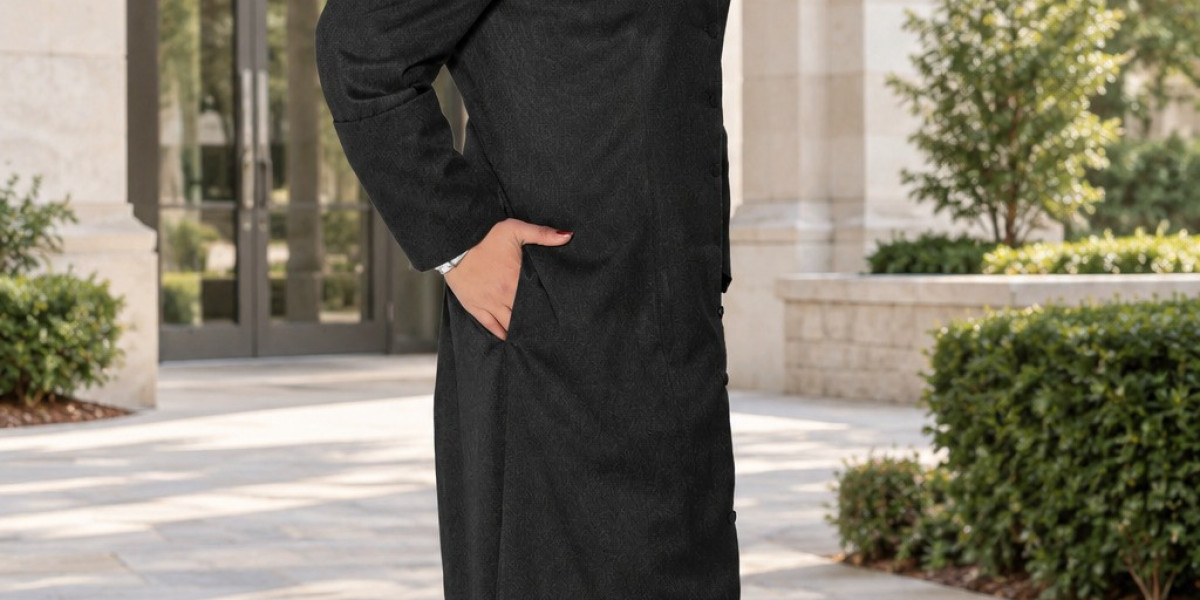
Black hides a great deal, which is one reason it is so common, but it does not hide a bulky pocket. Black female clergy robes look cleanest when pockets sit in the seams and stay mostly flat. A light load of tissues and a pen disappears into the drape, while a phone and a heavy key ring can leave a visible bump with every step. A few habits keep the line smooth. Carry the heavier item in the inside pocket, close to the body, and the lighter ones at the sides. Empty the side pockets before processions and photographs. And choose a fabric with some weight, because a lightweight cloth shows a loaded pocket sooner than a structured one. Thoughtful women's clergy clothing handles all of this at the pattern stage, so the wearer never has to manage it on Sunday morning.
Church Robes for Women: What Can Pockets Carry Without Spoiling the Solemn Look?
A robe is meant to look composed, so its pockets should hold things that are small, quiet and light. Good candidates are a tissue, a folded card, a pen, a lip balm and a spare button. Items that jingle, bulge or buzz are poor choices. Keys clatter during silent prayer, and a phone can vibrate against the fabric or pull one side of the robe down. If you must carry a phone, switch it off and keep it in the inside pocket. Think of the pockets as a vestry kit in miniature: enough to handle the small surprises of a service, never enough to turn the robe into a handbag. Church robes for women with this restraint built in tend to be worn more often and last longer, because the seams are not constantly under stress. In clergy wear generally, the best features are the ones nobody notices, and pockets belong in that group.
Female Preaching Robes: Do Pockets Work With Dresses, Suits and Blouses?
Women's Sunday outfits vary widely, and a robe has to work over all of them. Side openings, sometimes combined with pockets, let you reach through the robe to a dress pocket or a waistband beneath. Over a two-piece suit, the robe's own pockets replace the ones the outfit lacks. Over a slim dress, an interior pocket spares you the lumpy compromise of clipping a transmitter to a neckline or a thin belt. Female preaching robes are also worn over thick winter layers, so pockets need enough room to open without straining the fabric. Whatever you wear underneath, check that the pockets still sit comfortably when you are seated, since a pocket cut too low can dig into the thigh during a long sermon or a counseling session.
Can a Tailor Add Pockets to a Robe You Already Own?
Often, yes, with limits. A good tailor can open a side seam, set in a slim pocket bag and close the seam again, provided the robe is not so tightly lined or so lightly woven that the extra layer will show. An inside pocket for a microphone pack is usually simpler, because it sits against the lining and does not alter the outside at all. Ask the tailor to use a thin, smooth pocket fabric, to stitch a small reinforcement at the mouth of each pocket, and to place the openings where your hand naturally falls. Avoid patch pockets sewn on the outside, which look casual and can pull the cloth. If the robe is fragile or has valuable embroidery, have the tailor inspect it first and be ready to hear that the safest answer is to leave it unaltered.
How Do You Test Robe Pockets Before You Buy?
Product photos rarely show a pocket loaded, so ask and test. A short checklist helps:
Find the pocket count and positions in the product description, and ask for the depth in inches
Load each pocket with what you actually carry, then walk, sit, kneel, and lift your arms
Look in a mirror from the side and the back for bulges
Slip in the transmitter pack and check that it stays put
Check the stitching at the pocket mouth, which should be reinforced
Confirm the return policy before ordering online
eClergys, for example, accepts returns of stock sizes within 30 days and covers custom garments with a fit guarantee, which leaves room to test properly.
Which Other Features Should You Weigh Alongside Pockets?
Pockets are one feature among several, so weigh them against the whole garment. Several eClergys robes show how the features combine. Its white, red and royal blue women's robes each list three pockets, one inside breast and two side, together with 14 covered front buttons, five buttons on each cuff, soft shoulder pads, a half lining to the waist and a single back panel, all in superfine tropical cloth. Its close-fitting black robe adds a pleated back, a silk satin half-lining and two side pockets. If you need something different, such as a deeper pocket or a place for a microphone pack, eClergys says many of its ladies' robes can be customized for added detail, so ask before you order. Good clergy wear is judged by how all these elements work together on an ordinary Sunday, not by any single feature, and ordering to your own measurements lets you check each one against your routine.
Final Thoughts
Pockets change the practical design of womens pastor robes more than their size suggests. They decide where a tissue, a card, or a microphone pack can live, how the fabric hangs at the hip, and how steady a minister feels from the first hymn to the benediction. Look for seam-set pockets, a secure inside pocket for heavier items, reinforced stitching and enough depth to hold what you carry. Test them loaded before you commit, keep the load light so the line stays clean, and ask the maker what can be adjusted. Whatever clergy wear and women's clergy clothing you choose, the best pocket is the one nobody else ever notices.
Frequently Asked Questions
What do female pastors wear?
A robe over a personal dress, suit or blouse is the usual choice, with a stole or collar where the tradition expects one, though some pastors prefer professional clothes.
What is a pastor's robe called?
Names differ by tradition. You will hear pulpit robe, preaching robe, Geneva gown, cassock and alb.
Are pastors supposed to wear robes?
It depends on the denomination. Some expect robes, some prefer other dress, and many leave it to the pastor and the congregation.
What are the different types of clergy robes?
Churches use cassocks, albs, surplices and pulpit robes, plus stoles, collars and cinctures for particular roles and seasons.