
Ask any shop owner about the last time a machine went down in the middle of a big order, and you’ll get a story. Usually a long one. A spindle bearing, a servo drive that had to come from Pune, a customer calling every morning at ten sharp.
Fifteen years ago, the standard reaction was to buy a backup machine. Today a lot of owners work out the numbers differently and send part of the load to a shop that already has spare capacity. They aren’t doing it because business is bad. Often it’s because business is good and they’d like it to stay that way.
What outsourced machining really involves
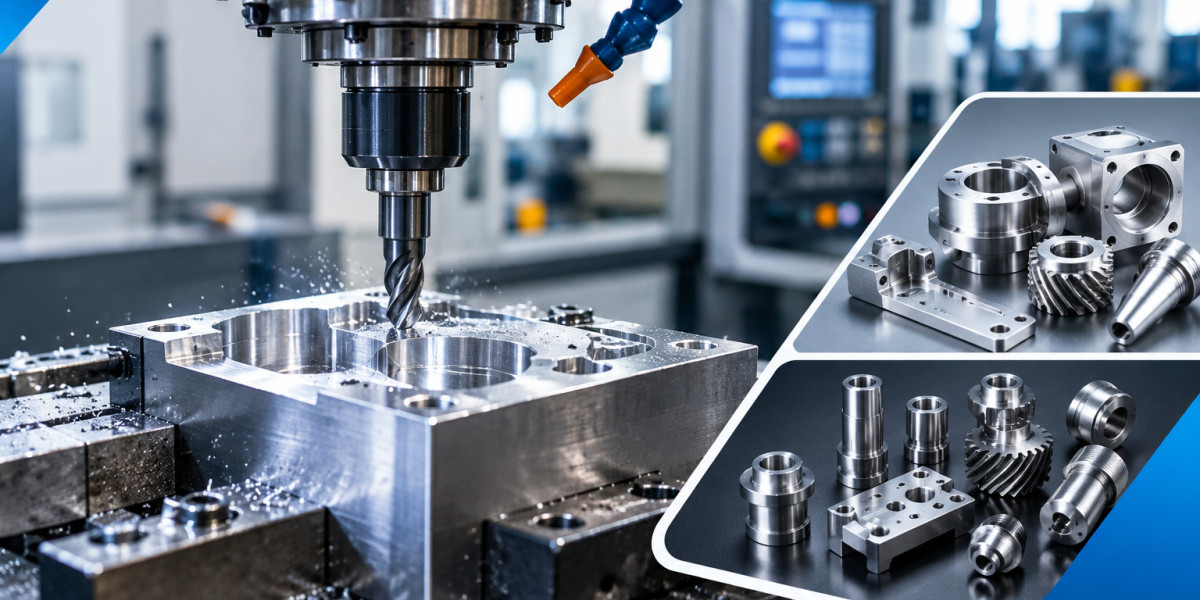
You hand a workshop the drawing, the material, the quantity and the date you need it by. They program it, set it up, machine it, inspect it and pack it. You get parts and an invoice. There’s no machine loan to service and no operator on your payroll. That is CNC Machining Job Work in its simplest form, and the better shops have usually cut something close to your part many times before you ever call.
The real cost of owning a machine
The sticker price is the easy part. A decent VMC runs into tens of lakhs before it cuts a single chip. Then come fixtures, tool holders, a probe, coolant, a compressor that keeps up, an annual maintenance contract and the floor space, which you could have used for assembly or storage.
And then there’s the person running it. Anyone who has tried to hire a programmer who can fix a bad setup without calling the owner knows how thin that market is. If he resigns in the middle of a rush, it doesn’t matter what’s standing on your floor. You have no capacity.
Orders never arrive evenly
Most plants see the same pattern. Three months of everything running flat out, then a quiet fortnight where a machine sits idle and still costs you power, interest and depreciation. Your own capacity is fixed. Outside capacity stretches and shrinks with you.
So the smarter plants keep their own machines for work that pays best, such as the critical parts, the tight-tolerance jobs and anything tied to their own know-how. Routine and overflow work goes out. The floor stays busy with things worth being busy with.
Why specialist shops tend to get it right the first time
A shop that machines aluminium housings every day has already made its mistakes, and on someone else’s order. The fixtures exist. The tool paths have been proven. The inspection routine is second nature to the people doing it.
When your own team tackles an unfamiliar part, you pay for the learning in scrap, overtime and a delivery date that slips quietly. Buying from a specialist doesn’t just lower the piece rate. It cuts down the surprises, and surprises are what hurt in manufacturing.
Where VMC work fits in
Vertical machining centres do most of the everyday heavy lifting in precision work: plates, brackets, housings, moulds, fixtures, anything that needs milling, drilling and tapping in one controlled setup. They’re flexible, and that flexibility has a price. Every new part needs its own workholding, its own program and a careful first-piece check.
This is why Job Work For Vmc Machine is one of the most common requests buyers send out. It suits prototypes, small and mid-size batches, and repeat orders where the program is already proven. If you need a part only forty times a year, owning the whole setup rarely makes sense.
Parts worth keeping in-house
Outsourcing isn’t a religion. Keep a part at home if it carries the know-how that makes your product yours. Keep it if the tolerance is so tight you’d rather stand next to the machine while it runs. Keep it if volumes are high and steady enough to load a machine all year.
Everything else deserves a second look. Here’s a simple test. Write down your last twenty part numbers and mark the ones your best operator would rather not touch. Those are your first candidates.
How to judge a shop beyond the quote
Quotes are easy to compare. Shops are harder. A few checks tell you more than any price sheet:
Ask what work they’ve turned down recently. A shop that says yes to everything will let you down eventually.
Ask to see an actual inspection report. Thin CMM or gauge records usually mean a thin process.
Place a trial lot. Fifty pieces will teach you more than a brochure.
Watch how quickly they reply while quoting. It rarely improves after the order is placed.
Get the price breakup in writing. Tooling, finishing, packing and freight can move the final number more than the machining rate does.
Where buyers go wrong
Most problems start with the drawing, not the machine. A missing tolerance, an unmarked surface finish or an old revision turns into rework, and rework turns into a late delivery.
The second mistake is buying purely on price. The lowest quote looks great until rejections and reschedules show up, and then it becomes the most expensive one on the table.
Then there’s skipping first-article approval. Signing off one correct piece before the full run takes a day and can save a month.
Finally, a lot of buyers change vendors every quarter. A shop that has worked with you for six months already knows your standards. A new one needs the whole conversation again.
Finding the right shop is the slow part
Capability isn’t the problem. India has no shortage of good machine shops. The slow part is finding the one that suits your material, tolerance and quantity without losing weeks to phone calls, referrals and directories nobody has updated since 2019.
That’s the gap Indust was built for. It puts buyers and procurement teams in front of suppliers whose capabilities match what they’re actually sourcing, so the search takes days instead of weeks.
How to start without betting the plant
Begin small. Pick one part with a complete drawing and send it to two shops. Compare the samples, not just the quotes. If you’re trying Job Work For Vmc Machine for the first time, a bracket or plate with moderate tolerances makes a good pilot.
Check the dimensions, the finish and how it was packed. Raise the volume only when a second batch comes out the same as the first.
The bottom line
Owning every machine used to be the proof of a serious manufacturer. These days the better proof is delivering on time, every time, without tying up capital or losing sleep over a spindle on back-order. For many plants, CNC Machining Job Work is how they get there.
If you’re a buyer or procurement lead tired of chasing suppliers one call at a time, take a look at Indust. It was made to help manufacturing teams find the right partners faster and get on with the actual work of making things.