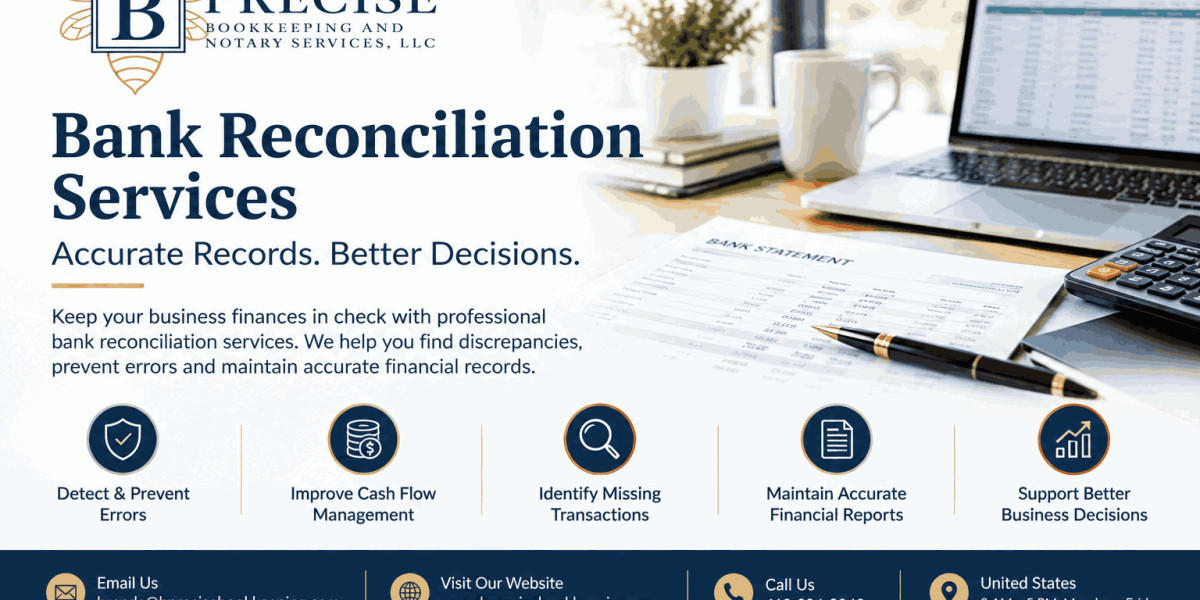

Running a small business means managing payments, expenses, customer deposits, and countless financial transactions. But how can you be confident that your business actually has the money your accounting records show?
This is where bank reconciliation services become essential. Regular reconciliation helps business owners maintain accurate financial records, identify discrepancies, and understand their true cash position.
What Are Bank Reconciliation Services?
Bank reconciliation services involve comparing a business's bank statements with its bookkeeping records to ensure that all deposits, withdrawals, fees, and payments are correctly recorded.
The purpose is to identify differences, investigate missing transactions, and correct bookkeeping errors before they affect financial reports.
For example, your accounting software might show a $12,000 balance, while your bank statement shows $11,650. A professional reconciliation process helps identify the $350 difference and determine whether it resulted from outstanding payments, bank fees, duplicate entries, or missing transactions.
Why Does Bank Reconciliation Matter for Small Businesses?
Accurate financial records help business owners make informed decisions. Without regular reconciliation, even small bookkeeping mistakes can create significant problems.
Here are five important benefits:
Detect Financial Errors: Identify duplicate payments, missing deposits, incorrect entries, and unexpected bank charges.
Improve Cash Flow Management: Understand how much money is actually available for operating expenses and upcoming payments.
Identify Suspicious Transactions: Recognize unauthorized withdrawals and unfamiliar transactions that require investigation.
Maintain Accurate Financial Reports: Ensure income, expenses, and account balances reflect properly recorded transactions.
Simplify Tax Preparation: Keep organized financial records throughout the year instead of rushing to correct mistakes during tax season.
How Does the Bank Reconciliation Process Work?
A consistent reconciliation process helps maintain reliable financial records. Here are the essential steps:
1. Collect Financial Documents
Gather bank statements, credit card statements, bookkeeping records, receipts, and transaction reports for the reconciliation period.
2. Compare Bank Transactions
Match deposits, withdrawals, transfers, and payments against the corresponding entries in your accounting software.
3. Identify Discrepancies
Investigate unmatched transactions, duplicate entries, missing expenses, outstanding checks, and unexpected bank charges.
4. Correct Bookkeeping Records
Record legitimate missing transactions and correct errors using appropriate accounting entries and supporting documentation.
5. Confirm Account Balances
Verify that the adjusted bank balance agrees with the adjusted bookkeeping balance and document any outstanding reconciling items.
Common Bank Reconciliation Problems Business Owners Face
Many small businesses struggle to maintain accurate records because financial tasks are postponed or handled inconsistently.
Common challenges include:
Unrecorded business expenses and customer payments.
Duplicate transactions imported through bank feeds.
Incorrect transaction categorization.
Missing credit card payments and bank fees.
Outstanding checks and deposits in transit.
Unreconciled accounts from previous months.
Ignoring these issues can make financial reports unreliable and complicate business planning.
Professional bookkeeping support can help identify these problems, organize historical records, and establish a consistent reconciliation routine.
Why Outsource Bank Reconciliation Services?
Managing every financial transaction internally takes valuable time away from business operations.
Outsourcing bank reconciliation services allows business owners to receive professional bookkeeping assistance without managing every accounting task themselves.
A bookkeeping professional can help with monthly account reconciliation, transaction matching, discrepancy investigation, QuickBooks support, and financial record maintenance.
This support is particularly useful for growing businesses, entrepreneurs with limited administrative time, and companies dealing with outdated or disorganized books.
How Often Should a Small Business Reconcile Its Bank Accounts?
Most small businesses should reconcile their bank and credit card accounts at least monthly. Businesses with frequent transactions or higher financial activity may benefit from weekly reconciliation.
Regular reviews make it easier to identify discrepancies while transaction details are still available.
Can bank reconciliation improve cash flow?
Yes. Bank reconciliation helps identify missing transactions, unexpected expenses, duplicate payments, and differences between recorded and actual cash balances. This gives business owners more reliable information for managing their finances.
Conclusion
Accurate financial records are essential for running a financially organized and successful business. Professional bank reconciliation services help small business owners identify errors, monitor cash flow, maintain reliable bookkeeping records, and make informed financial decisions.
If your accounts are behind, your transactions do not match, or you want dependable monthly bookkeeping support, Bee Precise Bookkeeping can help bring clarity and organization to your business finances. Visit https://bprecisebookkeeping.com/ to explore professional bookkeeping solutions and request a consultation.