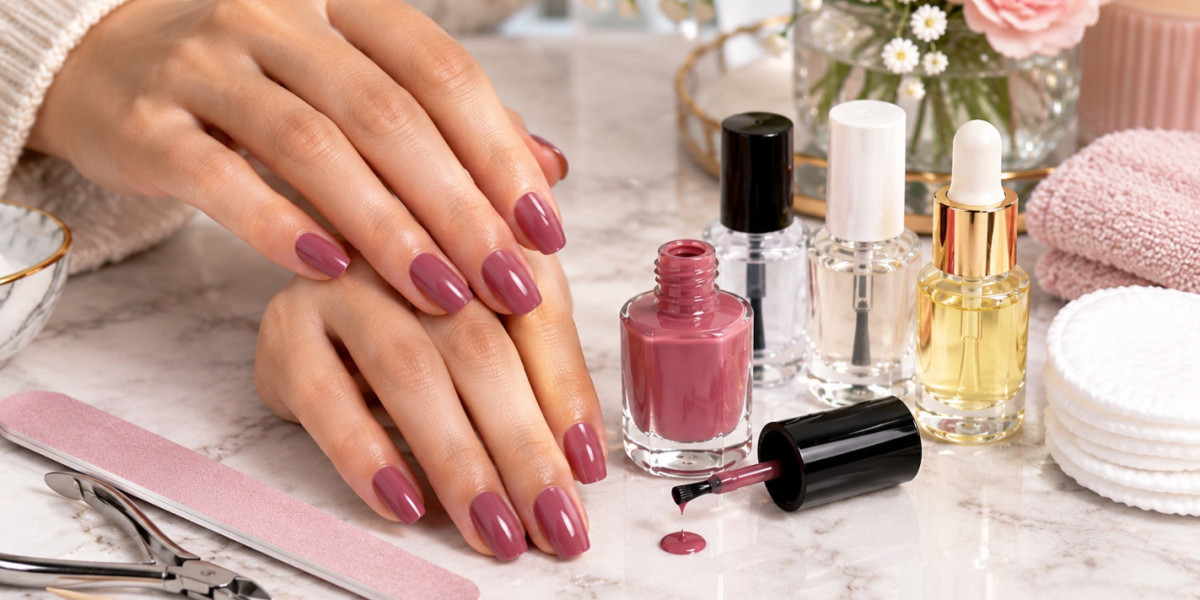

To make nail polish last longer, start with clean, dry, oil free nails, apply a base coat, paint two thin coats of color, wrap the tip of each nail and finish with a top coat. Then protect your manicure from water and rough use. Do these steps in order and regular polish can stay neat for about a week, sometimes longer.
Most chipping does not come from cheap polish. It comes from oily nails, thick coats, skipped layers and daily habits like washing dishes without gloves. This guide covers every step, from prep to aftercare. If you love French tip nails, the same prep rules apply to them too. You will also learn how to fix chips, what to do about peeling, and how to protect your polish during busy weeks, travel and cold weather.
Quick Overview | The Short Answer
Here is the whole routine in eight steps. Each one is explained in detail later.
Remove old polish and wash your hands.
Shape your nails and lightly buff the surface.
Treat your cuticles gently and leave them intact.
Wipe every nail with remover or rubbing alcohol to remove oil.
Apply one thin base coat.
Paint two thin coats of color, letting each one set.
Wrap the tip of each nail with color and top coat.
Add a thin top coat every two to three days.
Prep and thin coats matter more than the brand on the bottle.
Why Does Nail Polish Chip So Fast?
Nail polish chips fast when it cannot bond to the nail or when the nail keeps changing underneath it. The most common causes are oil on the nail, thick coats, a missing base coat, unsealed tips and repeated contact with water.
Oil and moisture get in the way
Natural skin oil, hand cream and cuticle oil all leave a thin film on the nail. Polish cannot grip a greasy surface, so it lifts at the edges or peels away in one piece. This is why a manicure often fails the day after you moisturize your hands and then paint your nails.
Thick coats stay soft underneath
A heavy coat can feel dry on top while the layer below stays wet. That leads to dents, bubbles and smudges. It also makes the whole layer more likely to crack at the first knock.
Water changes the shape of your nails
Nails absorb water and swell, then shrink as they dry. According to nail science educators, a nail plate normally holds about 15 to 18 percent water, and soaking can raise that to 25 to 30 percent. Each swelling cycle stretches the polish on top. The American Academy of Dermatology AAD also notes that too much water can weaken nails, causing them to split, peel or break.
Everyday habits add up
Opening cans with a fingernail, scraping stickers and picking at small chips all put stress on the edge. The AAD advises against using your nails as tools because it can cause chipping, splitting and lifting.
How to Prep Nails for Polish Step by Step
Good prep is the biggest factor in how long your manicure lasts. It takes about five minutes and costs nothing.
Shape your nails first
File in one direction rather than sawing back and forth. The AAD notes that filing back and forth can weaken nails. Keep the shape simple, such as round or soft square, because sharp corners snag and chip sooner. Shape the nail while it is dry, since wet nails are softer and tear more easily.
Does filing your nails help polish last?
Yes. Filing removes snags that start chips and gives polish a smooth edge to wrap over and filing in one direction helps avoid splitting. It works best together with light buffing, oil removal and a base coat.
Buff for smoother polish
Healthy nails are smooth and a little shiny, which gives polish less to hold. A few light passes with a soft buffer helps the base coat bond. Keep it gentle, because heavy buffing thins the nail. Wash your hands afterward and dry them well so no dust sits under the polish.
Treat your cuticles gently
Should you push back cuticles before polish? The AAD advises against cutting or removing cuticles because they protect the root of the nail. For a neat polish line, wipe away loose skin gently after a shower and leave the cuticle itself alone. Cutting it raises the risk of irritation and infection.
Remove oil before you paint
This is the single most useful prep step. Swipe a lint free cotton pad with nail polish remover or rubbing alcohol across each nail, including the tip and sides. This is how to remove oil from nails before polish, and it also helps if you want to dehydrate nails before painting.
Keep one caution in mind. The Mayo Clinic advises limiting nail polish remover use and WebMD reports that dermatologists agree people with brittle nails should avoid acetone remover. So wipe lightly, only when you are about to paint and avoid touching your nails afterward, since fingertips transfer oil straight back.
Does hand cream ruin nail polish?
Hand cream does not ruin polish if you apply it at the right time. Rub cream into your hands after your manicure has fully hardened and keep it off the nail surface before painting. Cream on a bare nail is one of the most common reasons for polish peels. Healthy hands start with a simple routine for glowing skin, so keep them moisturized between manicures.
How to Apply Polish for Long Wear
Careful application matters as much as prep. The same polish can chip in two days or last a week depending on how you apply it.
Base coat, nail strengthener or both?
A base coat helps color stick, fills tiny ridges and stops dark colors from staining. A nail strengthener works differently. Mayo Clinic says a nail hardener might help strengthen nails, but the AAD notes that polishes with strengthening ingredients can make nails stiffer, which may cause more breakage. So the evidence is mixed and for most people a regular base coat is the safer choice. If your nails are weak or brittle, ask a dermatologist first.
Paint thin, not thick
Is it better to paint nails thin or thick? Things are better. Thin coats let the solvents evaporate, so each layer hardens evenly. Two thin coats usually cover fully. If the color is streaky, add one more very thin coat rather than one heavy one.
To apply polish in thin coats:
Wipe extra polish off one side of the brush.
Place a small bead near the cuticle without touching the skin.
Brush down the center, then once on each side.
Keep light pressure so the bristles fan out evenly.
Fix mistakes right away with a small brush dipped in remover.
How long to wait between coats
Waiting times vary with the formula, the room temperature and humidity. A reliable rule is to wait until the last coat no longer looks wet and does not drag when you lightly touch its very edge with the brush. For most regular polishes that is around two to three minutes. Wait longer in a cold or humid room.
How to wrap the tips of your nails
Wrapping the tip, also called capping, is the best fix for polish that wears off at the tips. Run the brush horizontally along the very edge of the nail so the polish covers the free edge, not just the top. Do this with the base coat, each color coat and the top coat, using only a little polish so the edge does not flood.
Does clear polish make nail polish last longer?
Clear polish is not magic, but a clear base coat and a clear top coat are what make colored polish last longer. A single clear coat on bare nails will not outlast a full base, color and top coat routine.
Top coat | can you put it on every day?
You can apply a top coat more often than you repaint, but daily is not necessary. A thin layer every two to three days renews the surface that takes the wear. Clean your nails first, because a top coat over lotion or dirt looks cloudy, and avoid thick layers that dry slowly and dent easily. A quick-dry top coat speeds up the surface, but the polish underneath still needs hours to fully harden.
How to dry nail polish fast without smudging
Polish can feel dry in minutes but takes several hours to fully harden. To avoid smudges:
Paint thin coats.
Use a quick-dry top coat or drying drops.
Sit in a cool, well-ventilated spot, or use a fan on a cool setting.
Avoid hot hairdryers, which can cause bubbles.
Keep your hands still for at least 15 to 20 minutes.
Skip bed right after painting, since sheet marks are a common cause of dents.
How to Make Nail Polish Last Longer on Oily, Weak or Thin Nails
To make polish stick to oily nails, wash and dry your hands, then wipe each nail with remover or rubbing alcohol right before the base coat and avoid touching the nails afterward. For weak or thin nails, keep coats thin, buff very lightly and use a ridge-filling base coat instead of heavy buffing.
Limit remover, since Mayo Clinic advises using it sparingly and moisturize nails after removing polish, as the AAD has advised. If your nails peel, split badly or change in color, texture or shape, see a board certified dermatologist.
How to Make Gel Nail Polish Last Longer
Gel polish already lasts longer than regular polish, but the same basics apply. Prep carefully, keep oil off the nails, use thin coats and cure each layer fully under your lamp as the product instructions say.
Protect gel from water and picking, because peeling gel off yourself can pull layers off the nail. The AAD notes that a dip powder manicure can give chip free nails for up to four weeks but can be tough on nails, so give your nails a break between long wear manicures. Without a lamp, a gel-effect top coat over regular polish adds a glossy, air-dry finish, though it will not match true gel.
How to Fix Chipped or Peeling Polish
You can fix a small chip without redoing the whole manicure. Gently smooth the chipped edge with a fine file, dab a thin layer of matching color over the spot, let it set, then add a thin top coat and wrap the tip. If more than a few nails are peeling, remove the polish and start over. Layering new polish over old tends to look bulky and peels sooner. Following the full routine to nail polish last l prevents most chips in the first place.
Use this table to find the cause and the fix for the most common problems.
Problem | Likely cause | Quick fix |
Chips within one day | Oil on nails, no base coat, thick coats | Wipe nails with remover, use a base coat, paint thin |
Peels off in one piece | Polish never bonded to the nail | Remove oil, lightly buff, always use a base coat |
Wears off at the tips | Tips not sealed | Wrap the free edge with every layer |
Lifts at the cuticle | Polish touching skin, or cuticle area oily | Leave a hairline gap and wipe the area clean |
Wears off fast on thumbs | Thumbs do the most gripping and pressing | Refresh the top coat on the thumbs more often |
Bubbles | Thick coats or shaken bottle | Roll the bottle gently and paint thinner |
Smudges | Polish not set between coats | Wait longer and keep hands still |
Never fully dries | Thick coats, damp room, old polish | Use thinner coats, cooler dry room, replace old polish |
How to Make a Manicure Last in Real Life
Daily life is where most manicures fail. A few small habits protect your polish better than any product.
When cleaning or washing dishes
Wear rubber gloves every time. Warm water and detergent soften polish and water makes nails swell and shrink. If you forget, pat your nails dry right away.
After swimming
Pool water and long soaks weaken polish and dull the shine. Apply a fresh thin top coat before a swim day, wipe nails dry afterward and moisturize your hands once they are fully dry. Avoid picking at any lifted edge.
Through a busy week or with a baby at home
If you type, drive and carry bags all week or have a baby or toddler at home, keep your nails short and rounded, since short nails catch and break less. Press buttons with the pad of your finger, wear gloves for cleaning and bath time, and refresh your top coat every two to three days.
While traveling
Paint your nails one or two days before your trip so they have time to harden. Pack your color, a thin top coat and a nail file to smooth any snag before it becomes a chip.
In cold weather
Cold air dries nails and makes them brittle, so polish cracks sooner. Nail science references say a healthy nail plate holds about 15 to 25 percent water and becomes more brittle when it drops too low. Apply cuticle oil daily, moisturize your hands at night and wear gloves outdoors.
In fall and around the holidays
Fall manicure tips that last are simple: wear gloves, protect nails from dry air and refresh your top coat. Dark fall shades like burgundy and plum show chips, so wrap the tips. For Thanksgiving and holiday weeks, paint your nails two days ahead and choose a sheer neutral, soft berry or classic red that is easy to touch up.
For a wedding or special event
Paint your nails the day before so the polish fully hardens. Choose a shade that is easy to touch up, such as sheer nude, soft pink or classic red. Neutral colors hide small chips well. Add a fresh top coat the morning of the event, and pair your manicure with a light, natural face look such as a serum foundation finish.
How Long Should Nail Polish Last?
Regular nail polish usually lasts about five to seven days with normal use. With careful prep, thin coats, sealed tips and regular top coat refreshes, it can last about ten days or more. These are general estimates, not guarantees, because your nails, your activities and your products all change the result.
Two weeks is difficult for regular polish and more realistic with gel products. Toenail polish often lasts longer because toenails grow more slowly.
Interesting Facts About Nails and Nail Polish
Fingernails grow faster than toenails. In one widely cited study, fingernails grew about 3.47 millimeters a month while toenails grew about 1.62 millimeters a month. That is one reason pedicures look fresh longer.
Nails absorb water. Nail science educators report that a nail plate normally holds about 15 to 18 percent water, and soaking can raise that to 25 to 30 percent.
Nails are not tools. The AAD says using nails to open cans or pry things can cause chipping, splitting and lifting of the nail bed.
Cuticles have a job. The AAD says cuticles protect the root of the nail, which is why dermatologists advise leaving them intact.
Filing direction matters. The AAD notes that filing back and forth can weaken nails, so file in one direction.
Removers can be harsh. Mayo Clinic advises limiting nail polish remover use and WebMD reports dermatologists agree that people with brittle nails should avoid acetone remover.
Conclusion
Learning how to make nail polish last longer comes down to a few repeatable habits: clean, oil-free nails, a base coat, thin coats, wrapped tips and a fresh top coat every few days. For more beauty and style ideas, explore Stylish Women. Add gloves for chores and daily cuticle care, and your manicure can stay neat for a week or more. Which tip will you try first? Tell me in the comments.
Frequently Asked Questions (FAQs)
How can I make my nail polish last longer?
Wipe your nails clean of oil, apply a base coat, paint two thin coats of color, wrap the tip of each nail and finish with a top coat. Refresh the top coat every two to three days, wear gloves for chores and keep your hands moisturized once the polish has hardened.
How long should nail polish last?
Regular nail polish usually lasts about five to seven days. With good prep, sealed tips and a refreshed top coat, it can reach ten days or more. Gel and gel effect polish often last longer than regular polish.
Why does my nail polish chip after one day?
Polish that chips after one day usually points to oil on the nails, no base coat, thick coats or unsealed tips. Getting fresh polish wet or using your hands heavily in the first few hours can also cause early chipping.
Does a base coat really help nail polish last longer?
Yes. A base coat helps the color stick to the nail, fills small ridges and prevents staining. Skipping it is one of the most common reasons polish peels off in one piece.
How do I stop nail polish from peeling at the edges?
Remove oil before painting, use a base coat and wrap the free edge of each nail with every layer. Avoid thick coats and keep your nails dry for the first few hours. Refresh your top coat every two to three days.