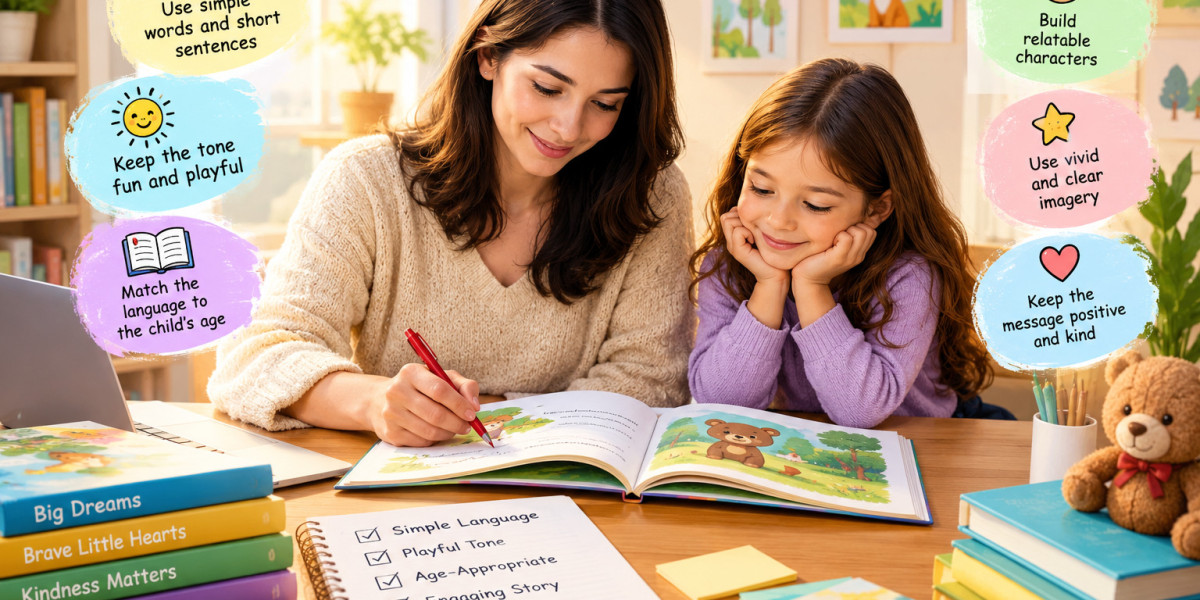

Writing for children requires more than an imaginative story and memorable characters. Authors must choose words carefully, create engaging sentences, and present ideas that young readers can understand without losing interest. Effective children's book editing helps transform an early manuscript into an enjoyable reading experience by balancing simple language, playful expression, and age-appropriate content. Every sentence should serve the story while encouraging curiosity and imagination.
However, simplifying a children's book does not mean making the writing dull or removing meaningful ideas. Instead, authors should consider their readers' developmental stages, vocabulary, attention spans, and reading abilities. Through thoughtful revision, writers can create stories that feel natural, entertaining, and accessible. Understanding the essential principles of children's book editing helps authors develop manuscripts that connect with young audiences and support their growing love of reading.
Understand Your Target Age Group Before Editing
Children develop language and reading skills at different rates as they grow. Therefore, a story designed for preschoolers requires a different approach from one written for middle-grade readers. Before editing, authors should identify their intended age group and evaluate whether the vocabulary, sentence structure, themes, and storytelling style match that audience.
Additionally, age guidelines should serve as helpful references rather than strict rules. Some children enjoy advanced vocabulary, while others prefer familiar words and shorter sentences. Authors can make better editing decisions by considering reading experience, emotional maturity, and the purpose of the book alongside the reader's age.
Edit Picture Books for Young Children
Picture books often rely on illustrations, repetition, rhythm, and a clear narrative to communicate ideas. Young children may understand a story through the combination of pictures and words, so authors should avoid explaining everything that the illustrations already show. A professional book publishing company can help authors refine their manuscripts by ensuring that the text complements the illustrations and that each sentence contributes something meaningful to the reading experience.
For example, rather than writing a long description of a rabbit moving through a garden, an author might write, "The little rabbit hopped past the flowers." This sentence communicates the action quickly and leaves room for the illustrations to add visual details. Such choices keep the story focused while making it easier for adults and children to read together.
Use More Complex Language for Older Children
Older children can usually follow more detailed plots, understand broader vocabulary, and recognize increasingly complex emotions. Consequently, chapter books and middle-grade stories can include richer descriptions, longer sentences, and more developed character relationships. Nevertheless, every word should remain purposeful and appropriate for the intended audience.
Authors should introduce challenging vocabulary naturally through context instead of overwhelming readers with unfamiliar expressions. For instance, a character who feels "reluctant" might hesitate before joining a school activity. The surrounding action helps readers understand the word while allowing the story to introduce new language in an engaging way.
Keep Language Simple Without Making It Boring
Simple language helps children understand a story without repeatedly stopping to interpret complicated sentences. However, effective simplicity still allows room for creativity, emotion, humor, and memorable descriptions. The goal is to communicate ideas clearly while preserving the author's unique storytelling voice.
During revision, examine sentences that contain several ideas, unnecessary adjectives, or complicated expressions. Replace confusing phrases with familiar words whenever possible. At the same time, retain interesting details that establish atmosphere or reveal character. This balance helps young readers follow the story while enjoying the language itself.
Choose Clear and Familiar Words
Children's stories become easier to understand when authors use precise words that match their readers' vocabulary. Instead of choosing an elaborate expression simply because it sounds impressive, writers should select language that communicates the intended meaning naturally. Clear wording allows readers to focus on the characters, events, and emotions.
For example, "Mia was exhausted after running" may communicate an idea more directly than "Mia experienced considerable physical fatigue following her lengthy journey." Although the second sentence contains more formal language, it creates unnecessary difficulty for young readers. During children's book editing, prioritize clarity while keeping useful descriptive words that enrich the story.
Break Long Sentences Into Manageable Parts
Long sentences can overwhelm beginning readers, particularly when they contain several actions, unfamiliar vocabulary, or multiple clauses. Breaking these sentences into shorter units helps children process information and follow the story's progression. However, varying sentence length prevents the writing from becoming repetitive or sounding mechanical.
Consider this example: "Oliver opened the door, ran into the garden, and chased the butterfly that had landed beside the old wooden fence." A simpler version might read, "Oliver opened the door and raced into the garden. A butterfly rested beside the old fence. He hurried after it." The revised passage creates a clear sequence and gives each action room to develop.
Make the Story Playful and Engaging
Playfulness encourages children to interact with a story through sound, movement, humor, and imagination. Well-chosen words can make a character feel lively or turn an ordinary event into an exciting moment. Therefore, editing should preserve the elements that make a children's manuscript entertaining rather than removing every unusual expression.
Authors can strengthen playful language by reviewing dialogue, action scenes, and descriptive passages. Look for opportunities to introduce amusing comparisons, surprising details, or expressive verbs. Nevertheless, playful elements should support the story instead of distracting readers from its central message or making important scenes difficult to understand.
Use Sound Words and Repetition Naturally
Onomatopoeia, or words that imitate sounds, can make children's stories more vivid. Expressions such as "splash," "buzz," "crash," and "whoosh" help readers imagine actions while adding rhythm to the text. Repetition can also create anticipation and encourage children to participate during shared reading.
For example, a story might repeat the phrase, "Who's hiding behind the tree?" whenever the main character discovers a new animal. This familiar pattern gives children something to anticipate and repeat aloud. However, authors should avoid using identical expressions too frequently when repetition no longer adds humor, rhythm, or meaning.
Include Humor That Matches the Audience
Humor can make characters memorable and encourage children to revisit a story. Funny misunderstandings, exaggerated situations, surprising discoveries, and playful dialogue often work well because they connect with children's curiosity. During editing, consider whether a joke feels natural within the scene and whether the intended readers can understand it.
For younger audiences, physical comedy and unexpected situations may work better than complicated wordplay. Older children may appreciate sarcasm, clever dialogue, or humorous references to familiar experiences. In either case, remove jokes that depend on obscure knowledge or interrupt the narrative. Effective humor should strengthen the story's personality without confusing its readers.
Create Age-Appropriate Characters and Themes
Children connect with characters who experience recognizable emotions, face meaningful challenges, and make decisions that influence the story. Although fictional characters can encounter extraordinary situations, their feelings and motivations should remain understandable to the intended audience. Editing helps authors ensure that character behavior, dialogue, and emotional reactions feel believable within the story's world.
Additionally, age-appropriate storytelling requires thoughtful treatment of difficult subjects. Stories can introduce friendship problems, disappointment, fear, loss, and personal growth without overwhelming young readers. Authors should consider how much detail a scene needs and whether the narrative offers enough context for children to process its emotional meaning.
Use Dialogue Children Can Understand
Dialogue should reflect the character's personality, age, background, and situation. Children rarely speak like formal essays, so overly polished conversations can make fictional characters feel unnatural. Read dialogue aloud during editing to identify stiff expressions, unnecessarily long speeches, and sentences that sound unlike real conversation.
For example, a young character might say, "I don't want to go. What if nobody plays with me?" rather than delivering a lengthy explanation about social anxiety. The simpler statement communicates the character's concern directly. Authors can still introduce emotional depth through actions, reactions, and conversations that gradually reveal what the character needs.
Handle Difficult Topics With Care
Children's books can address challenging experiences while maintaining sensitivity and hope. However, authors should consider the intended age group when deciding how to describe frightening situations, family changes, conflict, or other emotionally complex subjects. Clear language and thoughtful pacing can help readers understand what happens without introducing unnecessary distress.
During revision, check whether a difficult scene serves a meaningful purpose and whether the story treats its characters with respect. Avoid oversimplifying serious emotions or suggesting that every problem has an immediate solution. Instead, allow characters to seek help, learn from experiences, and discover realistic ways to move forward.
Strengthen Rhythm, Flow, and Read-Aloud Quality
Many children's books are read aloud by parents, teachers, librarians, or caregivers. Consequently, a manuscript should sound natural when spoken, not merely look correct on the page. Publishing consulting services can help authors refine their storytelling approach by improving rhythm, strengthening transitions, and creating varied sentence patterns that maintain children's attention and make shared reading more enjoyable.
Read the manuscript aloud during the editing process, paying attention to awkward phrases, repeated words, and sentences that interrupt the story's momentum. If a passage feels difficult to say naturally, consider simplifying its structure or replacing an awkward expression. These adjustments can improve the experience for both the person reading and the child listening.
Balance Repetition With Sentence Variety
Repetition can help young readers recognize patterns, remember important phrases, and participate in familiar parts of a story. Nevertheless, excessive repetition can weaken the narrative when every sentence follows the same structure. Authors should retain purposeful patterns while varying sentence openings, descriptions, and actions.
For example, several consecutive sentences beginning with "She saw" may make a passage feel monotonous. Revisions could introduce movement or sensory details instead: "She spotted a red balloon. Across the playground, children laughed and chased their shadows." This approach creates a livelier reading experience while preserving clarity and accessible language.
Review Grammar, Punctuation, and Consistency
Even an imaginative children's story needs accurate grammar, consistent punctuation, and clear sentence construction. Errors can distract readers, confuse dialogue, or make a manuscript appear unfinished. During copyediting, examine spelling, capitalization, verb tense, pronoun references, and punctuation while ensuring that the language remains suitable for the intended audience.
Consistency also matters throughout the story. Check character names, ages, physical descriptions, locations, timelines, and recurring expressions. If a character carries a blue backpack in one chapter, an unexplained change to a red backpack may confuse readers. Maintaining these details helps the fictional world feel coherent and allows children to concentrate on the story.
Test the Manuscript With Young Readers and Fresh Eyes
Authors can become so familiar with their stories that they overlook confusing passages or assume readers understand details that the manuscript never explains. Feedback from an independent reader can reveal where the story loses momentum, introduces unfamiliar words, or fails to communicate an important idea.
Whenever appropriate, share the manuscript with children from the intended age group under suitable adult supervision. Observe where they laugh, ask questions, lose interest, or misunderstand an event. Their reactions can reveal opportunities for improvement. However, treat individual responses as useful evidence rather than universal rules, since children differ in interests, abilities, and reading preferences.
Consider Professional Children's Book Editing
A professional editor can assess vocabulary, pacing, sentence clarity, character development, and age suitability with a fresh perspective. Depending on the manuscript's condition, the author may benefit from developmental editing, line editing, or copyediting. Each service addresses different concerns and helps prepare the manuscript for its next stage.
Professional feedback can be particularly valuable when writers struggle to balance simplicity with creativity. An editor can identify confusing language, repetitive passages, and inconsistent details while helping preserve the author's individual voice. Ultimately, this collaboration allows authors to make informed revisions and present a polished story that feels engaging, natural, and appropriate for young readers.
Conclusion
Successful children's book editing combines clear language, playful storytelling, age-appropriate themes, and careful attention to detail. Authors should choose vocabulary that suits their readers, vary sentence structures, strengthen dialogue, and preserve the rhythm that makes stories enjoyable. At the same time, consistent editing helps eliminate errors and maintain a coherent narrative.
By reading manuscripts aloud, gathering thoughtful feedback, and considering professional editorial support, writers can identify weaknesses that might otherwise go unnoticed. The ultimate goal is not simply to make a children's book easier to read. It is to create an inviting experience that encourages imagination, builds confidence, and inspires young readers to discover the joy of stories.