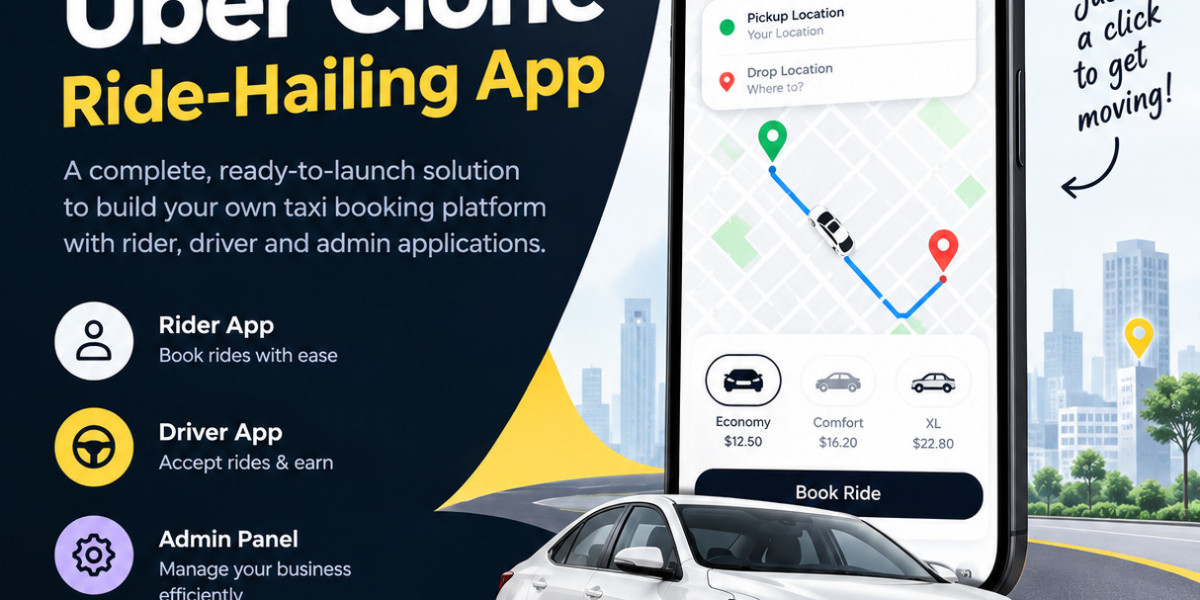

Ride-hailing is no longer a Silicon Valley experiment. It is a daily habit for hundreds of millions of people, and entrepreneurs in every region want a share of it. Building a taxi platform from zero, though, takes a large budget, a big engineering team and many months of testing. That is why a ready-made Uber clone script has become the preferred starting point for new mobility startups, taxi fleet owners and regional transport brands.
This guide explains what an Uber clone is, why the market still has room for new players, which features matter most in an Uber clone app, and how to choose the right solution for your business.
Why the Ride-Hailing Market Is Still Worth Entering
If you worry the market is already crowded, the numbers suggest otherwise. The global ride-hailing market was valued at about USD 188.6 billion in 2025, is estimated at USD 213.2 billion in 2026, and is forecast to reach USD 489.5 billion by 2035, with Asia Pacific as the largest region.
The market leader is also still growing quickly. In Q2 2026, Uber’s trips rose 18% year over year to 3.9 billion, driven by 16% growth in monthly active platform consumers. Uber reported 208 million monthly active platform consumers in that quarter. More people are choosing app-based rides every year, and that demand is not limited to one company.
Regional players are proving it. Marti, a Turkish mobility app, reported 4.90 million ride-hailing riders and 584 thousand registered drivers by September 2026, with rider numbers up 85% in a year and operations across 30 cities. The lesson for founders is that local, market-focused ride-hailing brands can grow fast, even next to global giants.
What Is an Uber Clone Script?
An Uber clone script is a pre-built, customizable software package that replicates the core workflow of a ride-hailing platform. It typically includes:
A rider app for booking, tracking and paying for trips
A driver app for accepting requests, navigating and managing earnings
An admin panel for managing users, fleets, pricing, commissions and reports
Because the foundation is already built and tested, you skip months of basic development. You then adapt the branding, features, payment methods and languages to your target market and launch much sooner than with a custom build.
An Uber clone is not about copying a brand. It is about using a proven product model, on-demand booking with real-time matching, and applying it to your city, country or niche.
Uber Clone Script vs. Building from Scratch
Factor | Ready-made Uber clone script | Custom build from scratch |
Time to market | Weeks | Many months |
Upfront cost | Lower | Significantly higher |
Technical risk | Tested codebase | Bugs found after launch |
Customization | Branding, features, modules | Fully unique |
Best for | Startups, fleet owners, regional brands | Companies with unique needs and large budgets |
For most new businesses, a ready-made script is the more practical route. You can validate demand in your market first, then invest in deeper customization once you have real riders and drivers.
Must-Have Features in an Uber Clone App
Not every Uber clone app is equal. Whichever solution you choose, check that it covers these essentials.
Rider app features
Quick sign-up with phone number, email or social login
Real-time GPS tracking and live driver location
Upfront fare estimates and multiple vehicle categories
Scheduled rides and ride history
In-app payments (cards, wallets, cash) and digital receipts
Ratings, reviews and SOS or emergency contacts
Trip sharing, so friends and family can follow a ride
Driver app features
Simple onboarding with document upload and verification
Online/offline toggle and ride request accept/decline
In-app navigation with optimized routes
Earnings dashboard and payout tracking
Trip history and rider ratings
Admin panel features
Dashboard with live trip, revenue and user analytics
Dynamic pricing, surge rules and promo codes
Driver and vehicle approval workflows
Commission settings and payout management
Support tickets and dispute handling
Multi-city, multi-language and multi-currency controls
If you plan to expand later, ask whether the script can add services such as parcel delivery, food delivery or rentals on the same platform. Many mobility brands now run a “super app” approach to raise the value of each customer.
How Does an Uber Clone Make Money?
A well-structured Uber clone gives you several revenue streams:
Commission per ride: a percentage of each fare from the driver.
Surge or dynamic pricing: higher fares during peak demand.
Cancellation fees: charged when riders or drivers cancel late.
Subscription plans: monthly plans for drivers or frequent riders.
In-app advertising and partnerships: local brands paying for visibility.
Corporate accounts: business travel and employee commute packages.
Start with simple commissions, then add other streams as your user base grows. Layering too many fees at launch can push riders and drivers away.
How to Choose the Right Uber Clone Script Provider
Your provider decides how smooth your launch will be. Look at these points before you commit.
1. Source code ownership and customization. Confirm whether you get full source code and the freedom to change features, design and workflows. A closed system limits your growth.
2. Scalability. Your platform should handle more riders, drivers and cities without a rebuild. Ask about server architecture and load handling.
3. Payment and map integrations. Check support for the payment gateways and map services that work in your region. A great script is useless if local payment methods are missing.
4. Security and compliance. Look for encrypted data, secure payments, driver verification and compliance with your local transport rules.
5. Support and updates. Ask what post-launch support is included, how long, and how updates are delivered. Ride-hailing apps need ongoing maintenance.
6. Real demos. Test live demo apps for riders, drivers and admins before buying. Seeing the full flow tells you more than any brochure.
Common Mistakes to Avoid When Launching Your Uber Clone App
Launching everywhere at once. Start in one city or one district, build driver supply and rider trust, then expand.
Ignoring driver experience. Without drivers there are no rides. Fair commissions, quick payouts and a simple app keep them active.
Skipping local regulations. Licensing, insurance and vehicle rules differ by region. Check them before you launch, not after.
Underinvesting in marketing. A good app does not market itself. Plan driver recruitment, referral offers and local campaigns from day one.
Copying blindly. Study what global leaders do well, then add something your market lacks: women-safety features, local-language support, lower commissions for drivers, or niche services like airport transfers or corporate rides.
A Simple Launch Roadmap
Research your market: demand, competitors, regulations and pricing.
Pick your script and provider: compare features, ownership, support and demos.
Customize: logo, color scheme, vehicle types, fare rules and payment gateways.
Test thoroughly: run pilot rides with a small group of drivers and riders.
Soft launch in one area: gather feedback and fix issues fast.
Scale: add cities, services and marketing as unit economics improve.
Final Thoughts
The ride-hailing market is large and still expanding, and the growth is not reserved for global brands. A well-chosen Uber clone script lets you enter this space faster, with lower cost and risk than a custom build. The winning formula is simple: choose a scalable, customizable Uber clone app, serve one market exceptionally well, treat drivers as partners and improve with real user feedback.
Whether you run a taxi fleet looking to go digital or you are a startup founder planning a local mobility brand, a ready-made Uber clone can give you a strong foundation. Choose your provider carefully, test before you commit, and launch with a focused plan.
Get Free Demo:
Visit: https://www.trioangle.com/uber-clone/
+91 63796 30152 | [email protected]