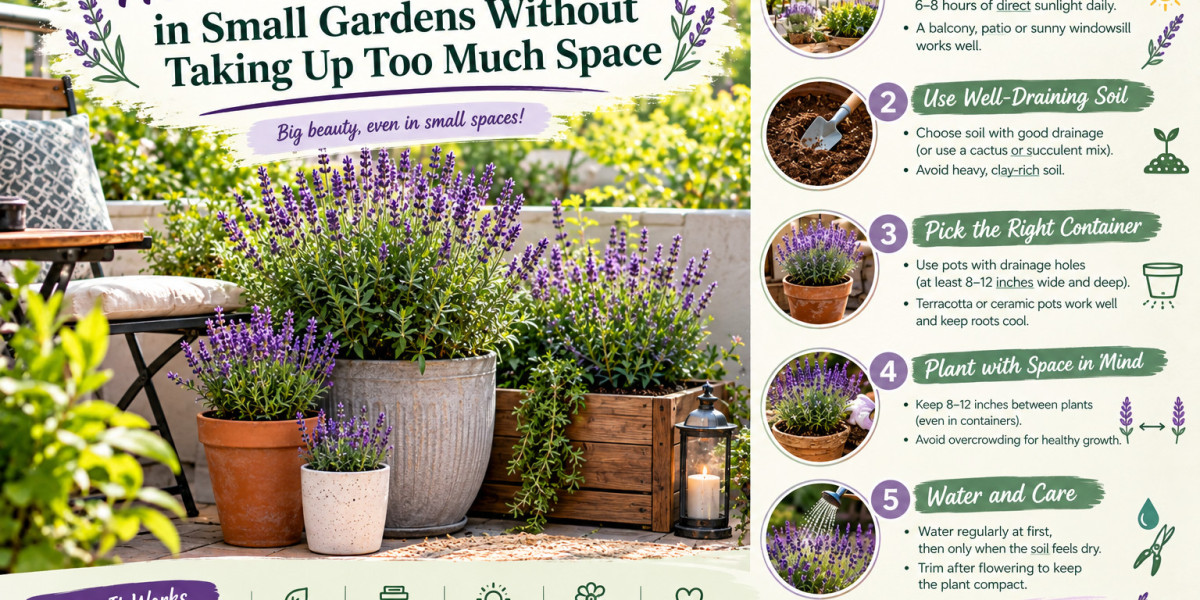

A small garden can still feel fragrant, colorful, and full of life with a few thoughtful choices. Lavender is especially useful because its silvery foliage and purple flowers bring character without needing a large bed. Learning How to Plant Lavender in a compact space starts with choosing the right spot, giving the plant suitable drainage, and using every available corner wisely. With a little planning, even a narrow border, balcony, or tiny courtyard can make room for this classic garden favorite.
Choose a Compact Variety and the Right Spot
Before planting, check the mature size of the lavender variety you want. English lavender is often a practical choice for smaller gardens, while some larger varieties need more room to spread. Look for a variety suited to your local climate and leave enough space for airflow around the plant.
They should choose a spot that receives around six hours of direct sunlight a day, where possible. Lavender usually grows best in full sun and well drained soil. Their plants are less likely to thrive in damp, shaded corners, so a sunny edge or open patio may be a better fit. YourHomify shares practical ideas to help gardeners make small outdoor spaces work harder.
Use Containers to Save Ground Space
Pots are one of the easiest ways to grow lavender when garden beds are limited. Choose a container with drainage holes and enough room for the roots to develop. A pot around 30 centimetres wide can suit many young plants, though the variety and its expected size should guide the final choice.
They can place containers beside steps, along a sunny wall, or near a doorway where the flowers can be enjoyed. Their pots can also be moved when light conditions change, but avoid leaving them in standing water. Use a free draining potting mix, and make sure the container drains well after watering. Terracotta pots are useful because they allow moisture to evaporate through the sides.
Make the Most of Edges and Vertical Space
A narrow border can still support lavender if plants are spaced with their mature width in mind. Rather than squeezing many plants into one strip, use a few well placed plants and fill nearby gaps with low growing companions that enjoy similar sunny, dry conditions. This creates a fuller look without crowding the lavender.
They can also use raised planters or sturdy containers on steps to introduce different levels. Their arrangement should leave room for light and air to reach the foliage. Avoid stacking pots where lower plants remain in shade all day. If a balcony is the only outdoor area available, a single large pot can provide more growing room than several tiny containers. YourHomify offers more gardening ideas for making limited outdoor areas feel welcoming and useful.
Prepare the Soil Before Planting
Lavender dislikes sitting in wet soil, so drainage matters more than rich feeding. If the ground is heavy clay, consider a raised bed or container rather than trying to grow lavender in a persistently damp spot. In a garden bed, loosen the soil and improve drainage where appropriate. Avoid adding too much compost or fertilizer, as overly rich soil can encourage leafy growth at the expense of flowers.
They should dig a hole about as deep as the root ball and slightly wider. Set the plant at the same depth it was growing in its nursery pot, then firm the soil gently around the roots. Their plants need a thorough drink after planting, but the soil should not remain soggy. Leave enough room around each plant for air circulation and future growth.
Water and Prune Without Overdoing It
Newly planted lavender needs regular checks while its roots establish. Water when the surrounding soil begins to dry, adjusting for rainfall, heat, and container size. Established plants are usually more tolerant of dry conditions than constantly wet soil. They should avoid watering on a fixed schedule if the soil is still damp.
Light pruning helps lavender keep a tidy shape. After flowering, trim the spent flower stems and lightly shape the green growth, but avoid cutting deep into old woody stems. Their plants can become leggy when left untrimmed, so gentle seasonal care helps maintain a compact outline. Gardeners can share experiences and ask questions in a gardening discussion when they need practical advice for their conditions.
Pair Lavender With Suitable Neighbours
Companion planting can make a small garden look layered without using much extra space. Choose plants with similar preferences for sunshine and well drained soil, such as thyme, sage, or other Mediterranean herbs. Their different leaf shapes and textures can make the planting more interesting while keeping care needs compatible.
They should avoid pairing lavender with plants that need consistently moist soil, as the watering needs may conflict. Their layout can remain simple: place lavender where it receives the most sun, then use lower companions along the edge. A small group often looks more deliberate than a crowded mix of many different plants. Keep pathways clear so the garden remains easy to use and maintain.
Conclusion
Learning How to Plant Lavender in a small garden is mostly about choosing a suitable variety, providing full sun and good drainage, and resisting the urge to overcrowd the space. Containers, raised planters, and sunny borders can all work when planned carefully. With modest pruning and sensible watering, lavender can bring fragrance and color to even a compact outdoor area. YourHomify offers more inspiration for making everyday gardens practical, attractive, and enjoyable.