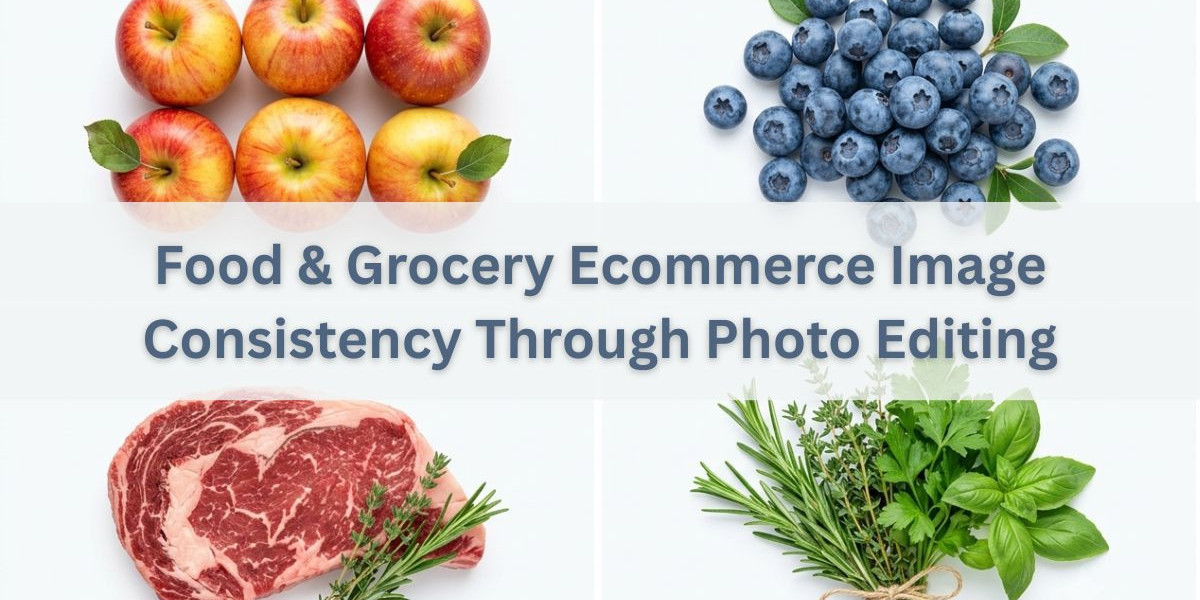

The in-store supermarket experience is extremely sensory. Buyers test the ripeness of a melon by pressing it, check for marbling on cuts of beef and smell fresh herbs before adding them to their shopping carts. The translation of this 'hands-on' and 'sensual' experience is the biggest challenge for online grocery retailers. Freshness and quality have to be sold to the shoppers without any other means than a two dimensional picture. Professional e commerce photo editing services are very useful in helping successful brands to create this illusion of perfection and uniformity across thousands of fluctuating items.
Why Fresh and Perishable Products Are Difficult to Standardize
Food is different from manufactured consumer goods, such as a smartphone or sneaker, because it is always unpredictable. The shape, gloss, and redness of a red bell pepper taken in July could differ greatly from those taken in November.
Moreover, taking food photos has a time constraint. Bright studio strobes cause fresh produce to wilt. Labels will be covered rapidly by condensation on the frozen packaging. The high-quality ice cream melts in several minutes and loses its appealing texture. If the online grocer is using only raw photos, then the catalog might soon look like a kaleidoscope of scant lighting, different shade depth, and varying color shades. This is a kind of gap between the brand and the consumer; this is what makes them detached.
Why Consistent Product Images Build Shopper Confidence
Visual consistency in digital retailing directly relates to consumer trust. A user's brain subconsciously searches for uniformity while they scroll through a digital produce aisle. If someone is buying a basket that seems to be brilliantly lit, and the blueberries at the side of the basket seem dark, grainy and with a lot of shadow, the consumer will automatically wonder about the freshness of the blueberries.
Any discrepancies indicate that there is no quality control. A common catalogue, on the other hand, resembles a pristine, brightly lit grocery store's aisles. It gives the customer confidence that the whole logistics chain is sound and that the food that they receive will meet the same high standards as what they see on their screen.
Essential Photo Editing Techniques for a Consistent Grocery Catalog
The difference between the hard-to-control photography and a mouth-watering online storefront is highly specialized post-production. Strong product image editing agencies use a mix of technical and artistry to help standardize the food products. These are the most common methods:
Color Matching and Saturation: Editors are used to improve the natural colour of fresh produce using digital techniques. They isolate specific colours of a fruit or vegetable and match them to a standard colour chart, so that all green apples appear of the same freshness, regardless of the actual picking time.
Blemish Excision: Blemish Excision. Retouchers carefully eliminate dirt, minor scratches, unappealing bruising and uneven leaves to give a clean and flawlessly finished product, but not one that appears plastic.
Background Extraction and Shadow Uniformity: Editors cut the mess of studio backgrounds out to form a seamless grid, known as Background Extraction and Shadow Uniformity. They put all the items on a clean, uniform white canvas. They then add artificial but very realistic drop shadows, so that objects don't appear to be floating in an empty space.
Highlight and Reflection Control: Groceries tend to be wrapped in reflective plastics or shiny glass bottles. Editors trace and tame blinding light, ensuring that food labels, logos and best before dates are easy to read.
Managing High-Volume Grocery Catalogs Efficiently
The size of an ordinary grocery catalog is appalling. Supermarkets have tens of thousands of SKUs that are constantly coming in and out of the system. Being able to manage this volume internally is virtually impossible without causing mass bottlenecks in the supply chain.
Online grocers contract the work so they don't have to deal with the constant changes in catalogues. In fact, brands will hire specific post-production companies such as Visuals Clipping which will deliver huge numbers of raw images quickly and effectively. With the help of dedicated e commerce photo editing services, grocers can maintain a high visual standard without putting too much of a strain on their own marketing departments and process thousands of images each week.
Maintaining Brand Consistency Across Seasonal Products
Seasonal change is one of the other big challenges. When it comes to packaging, it's not your regular kind, it's holiday; when it comes to fruits, it's not summer, it's root vegetables and winter squashes. These items are often sold in the season by the vendor, who may not have the same style guide as the grocer, and as a consequence is likely to provide different imagery.
Ecommerce photo editing services can be used strategically to enable brands to import photos from hundreds of third-party vendors and then 'match' them. Each image is processed in a very rigorous pipeline, with matching of the edges, re-calibration of the lighting, and standardization of the scale, making a large pumpkin appear the same size as a single garlic clove on the grid.
Final Thoughts: Professional Photo Editing Is Essential for Grocery Ecommerce Success
The delivery to a customer door-to-door of fresh food is very complex, but this chaos should not be visible in the digital presentation. A brand's digital catalogue needs to convey a degree of perfection, cleanliness and freshness at all times and in all seasons, in order to succeed in the fiercely competitive online grocery market.
Variations will always be found in nature and in studio shoots there will always be physical limitations. But food and grocery brands can overcome all these physical limitations by adopting a complete e commerce photo editing service. They can guarantee that the weather, the vendor or even the season, their produce will never fall short of the top catalogue standards, thereby leading to conversions and building trust with consumers over a long period of time.
Also Read: How Food Delivery Brands Use Photo Editing to Increase Orders