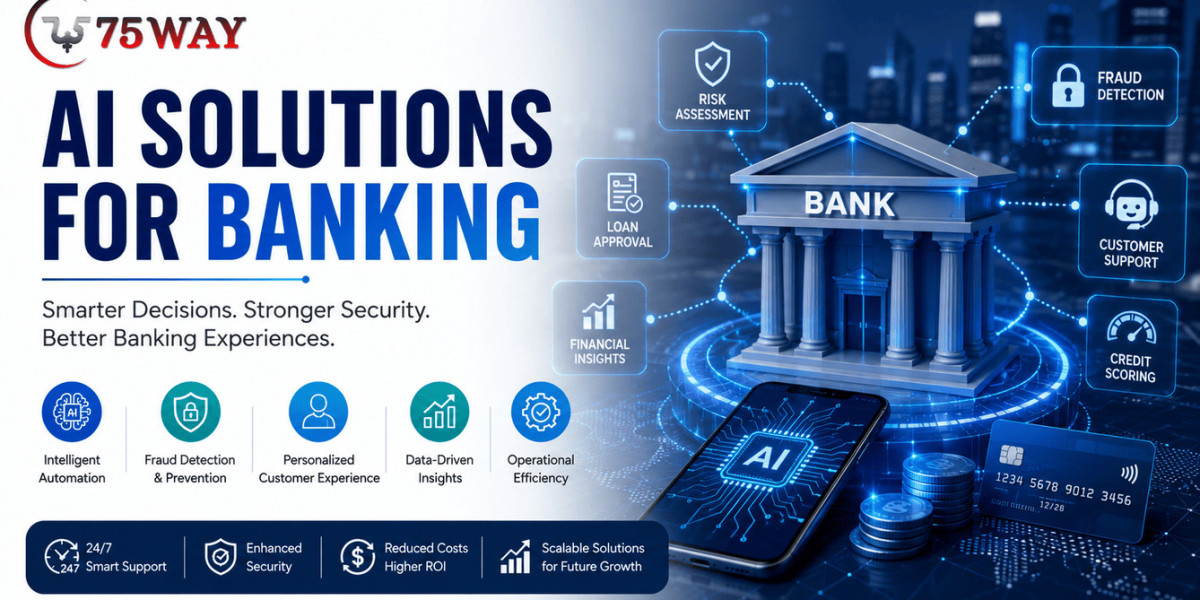

The banking sector is experiencing a significant transformation driven by artificial intelligence. As financial institutions face growing customer expectations, increasing cybersecurity threats, evolving regulations, and rising operational costs, AI has emerged as a powerful tool for innovation and efficiency. Modern banks are leveraging intelligent technologies to automate processes, enhance customer experiences, improve risk management, and make data-driven decisions.
Today, AI solutions for banking are helping financial institutions move beyond traditional service models toward more personalized, secure, and efficient operations. From fraud detection and customer support to loan approvals and predictive analytics, artificial intelligence is becoming a critical component of modern banking strategies.
As digital banking adoption continues to accelerate worldwide, organizations are increasingly investing in advanced technologies to remain competitive. This article explores how artificial intelligence is transforming banking, its key applications, benefits, challenges, and future opportunities for financial institutions.
The Rise of Artificial Intelligence in Banking
Banking has always been a data-intensive industry. Every day, financial institutions process millions of transactions, customer interactions, loan applications, account updates, and compliance reports.
Traditionally, many of these processes required significant manual effort. However, advancements in machine learning, natural language processing, predictive analytics, and intelligent automation have enabled banks to process vast amounts of information faster and more accurately than ever before.
Artificial intelligence is now being applied across numerous banking functions, including:
- Fraud detection
- Customer service automation
- Credit risk assessment
- Loan underwriting
- Regulatory compliance
- Financial forecasting
- Wealth management
- Personalized banking experiences
These capabilities are helping financial institutions improve efficiency while delivering greater value to customers.
Understanding AI Solutions for Banking
Artificial intelligence in banking refers to the use of intelligent algorithms and machine learning models to analyze data, automate processes, and support decision-making.
Unlike traditional software systems that follow predefined rules, AI continuously learns from data patterns and improves its performance over time.
Banks use intelligent systems to:
- Analyze customer behavior
- Detect unusual transaction activities
- Predict financial risks
- Automate repetitive tasks
- Enhance security measures
- Deliver personalized financial recommendations
By leveraging advanced analytics and automation, financial institutions can provide faster, more accurate, and more efficient services.
Why Banks Are Accelerating AI Adoption
Several factors are driving the rapid adoption of artificial intelligence across the banking industry.
Growing Customer Expectations
Modern customers expect seamless digital experiences, instant service, and personalized financial solutions. AI enables banks to meet these expectations through intelligent customer engagement and automation.
Increasing Cybersecurity Threats
Financial institutions remain prime targets for cybercriminals. Machine learning algorithms help identify suspicious activities and prevent fraudulent transactions in real time.
Operational Efficiency Demands
Banks are constantly seeking ways to reduce costs and improve productivity. Automation helps eliminate manual processes and streamline workflows.
Regulatory Complexity
Compliance requirements continue to evolve. Intelligent systems assist banks in monitoring transactions, identifying risks, and maintaining regulatory standards.
These challenges have accelerated investment in innovative AI in banking solutions across the financial sector.
Key Applications of AI in Banking
1. Fraud Detection and Prevention
Fraud remains one of the biggest challenges for financial institutions worldwide.
Artificial intelligence can analyze transaction patterns in real time and identify anomalies that may indicate fraudulent activity. Unlike traditional rule-based systems, machine learning models continuously adapt to emerging fraud tactics.
Benefits include:
- Faster fraud detection
- Reduced financial losses
- Enhanced customer protection
- Improved transaction monitoring
By proactively identifying suspicious behavior, banks can significantly strengthen their security frameworks.
2. Intelligent Customer Support
Customer service is another area where artificial intelligence is delivering significant value.
AI-powered virtual assistants and chatbots provide instant responses to customer inquiries, helping banks offer support around the clock.
These systems can assist with:
- Account information requests
- Transaction inquiries
- Card management
- Loan information
- Payment assistance
- Banking FAQs
By automating routine interactions, financial institutions improve customer satisfaction while reducing support costs.
3. Credit Scoring and Loan Approvals
Traditional credit evaluation processes often rely on limited financial indicators.
Artificial intelligence analyzes a broader range of data sources, including spending behavior, transaction history, income patterns, and financial trends.
This enables lenders to:
- Improve credit assessments
- Reduce default risks
- Accelerate loan approvals
- Expand access to financial services
More accurate evaluations help banks make informed lending decisions while improving customer experiences.
4. Personalized Banking Experiences
Customers increasingly expect financial services tailored to their unique needs.
AI-driven recommendation engines analyze customer preferences, transaction patterns, and financial goals to deliver personalized product recommendations.
Examples include:
- Customized savings plans
- Investment suggestions
- Credit card recommendations
- Financial wellness advice
Personalization helps strengthen customer relationships and increase engagement.
Benefits of AI for Banking
The growing adoption of intelligent technologies offers numerous advantages for financial institutions.
Enhanced Decision-Making
Artificial intelligence processes large datasets quickly and identifies insights that support strategic decisions.
Improved Operational Efficiency
Automation reduces manual workloads, enabling employees to focus on high-value activities.
Better Risk Management
Predictive analytics helps institutions assess risks more accurately and respond proactively to emerging threats.
Increased Customer Satisfaction
Faster service, personalized experiences, and improved accessibility contribute to stronger customer relationships.
Reduced Costs
Process automation and operational optimization help lower expenses while increasing productivity.
These benefits explain why demand for advanced AI for banking continues to rise globally.
Emerging AI Banking Solutions Transforming Financial Services
The banking industry continues to innovate through new AI-driven technologies.
Predictive Financial Analytics
Machine learning models help banks forecast customer behavior, market trends, and financial risks.
Intelligent Document Processing
AI automates the extraction and analysis of information from documents such as loan applications, contracts, and compliance reports.
Voice Banking
Voice-enabled assistants allow customers to perform banking activities using natural language commands.
Anti-Money Laundering (AML) Monitoring
Artificial intelligence strengthens AML programs by identifying suspicious transaction patterns and supporting regulatory compliance.
Wealth Management Automation
Robo-advisors provide investment recommendations based on customer goals, risk tolerance, and market conditions.
These innovations demonstrate the expanding role of AI banking solutions in modern financial ecosystems.
How Artificial Intelligence Improves Risk Management
Risk management is a critical function for every financial institution.
Artificial intelligence helps banks evaluate multiple risk factors simultaneously, including:
- Credit risk
- Market risk
- Operational risk
- Fraud risk
- Compliance risk
Predictive models continuously analyze internal and external data to identify emerging threats and opportunities.
This proactive approach enables banks to strengthen resilience while improving decision-making accuracy.
The Role of AI in Regulatory Compliance
Compliance management is becoming increasingly complex as regulations continue to evolve.
Artificial intelligence supports compliance efforts by:
- Monitoring transactions
- Detecting suspicious activities
- Automating reporting processes
- Identifying regulatory violations
- Supporting audit readiness
These capabilities reduce compliance costs while minimizing regulatory risks.
Challenges of Implementing AI in Banking
Although artificial intelligence offers significant benefits, successful implementation requires careful planning.
Data Privacy and Security
Banks must protect sensitive customer information and comply with strict data protection regulations.
Integration Complexity
Many financial institutions operate legacy systems that can be difficult to integrate with modern AI platforms.
Model Transparency
Regulators increasingly require explainable AI models that provide transparency in decision-making processes.
Workforce Adaptation
Organizations must train employees to work alongside intelligent technologies and adapt to evolving workflows.
Addressing these challenges is essential for maximizing the value of AI investments.
Why Financial Institutions Need the Right AI Development Partner
Implementing artificial intelligence successfully requires specialized expertise in financial technology, machine learning, cybersecurity, cloud infrastructure, and compliance frameworks.
When selecting a technology partner, banks should evaluate:
Industry Experience
Banking-specific expertise helps ensure solutions align with industry regulations and operational requirements.
Custom Development Capabilities
Every institution has unique needs that require tailored solutions.
Security Standards
Strong cybersecurity practices are critical when handling financial data.
Scalability
Solutions should support future growth and evolving business requirements.
Ongoing Support
Continuous optimization ensures long-term performance and success.
How 75way Technologies Delivers AI Solutions for Banking
As financial institutions accelerate digital transformation initiatives, partnering with experienced AI development companies becomes increasingly important.
75way Technologies specializes in developing advanced artificial intelligence applications tailored to the needs of modern financial organizations. The company delivers customized solutions for intelligent automation, predictive analytics, fraud detection, customer engagement, risk management, and banking process optimization.
By combining technical expertise with innovative development methodologies, 75way Technologies helps financial institutions leverage artificial intelligence to improve efficiency, enhance customer experiences, and drive sustainable growth.
The Future of AI in Banking
The future of banking will be shaped by increasingly sophisticated intelligent technologies.
Emerging trends include:
- Hyper-personalized financial services
- Autonomous banking operations
- Advanced fraud prevention systems
- Real-time risk monitoring
- AI-powered financial advisors
- Intelligent lending platforms
- Predictive customer engagement
As these innovations continue to mature, banks will gain new opportunities to improve operational efficiency, strengthen customer relationships, and unlock new revenue streams.
Organizations that embrace digital transformation today will be better positioned to lead the future of financial services.
Conclusion
Artificial intelligence is transforming banking by enabling smarter decision-making, enhanced security, improved customer experiences, and greater operational efficiency. The growing adoption of AI solutions for banking demonstrates how financial institutions are leveraging intelligent technologies to remain competitive in a rapidly evolving digital landscape.
From fraud prevention and personalized customer interactions to predictive analytics and compliance management, AI is creating new opportunities for innovation across the financial sector.
As investment in AI for banking continues to increase, institutions that embrace intelligent technologies will be better equipped to meet customer expectations, reduce risks, and drive long-term growth. By partnering with experienced technology providers such as 75way Technologies, banks can successfully navigate their digital transformation journeys and unlock the full potential of artificial intelligence.
Frequently Asked Questions (FAQs)
1. What are AI solutions for banking?
AI solutions for banking are technologies that use artificial intelligence, machine learning, and automation to improve banking operations, customer service, security, and decision-making.
2. How does AI help prevent banking fraud?
Artificial intelligence analyzes transaction patterns in real time and identifies unusual activities that may indicate fraud, enabling faster intervention and protection.
3. What are the benefits of AI in banking solutions?
Benefits include enhanced operational efficiency, improved customer experiences, better risk management, faster decision-making, and reduced operational costs.
4. Can AI improve loan approval processes?
Yes. AI analyzes a broader range of financial and behavioral data, helping banks make more accurate lending decisions while accelerating approval timelines.
5. How does AI support regulatory compliance?
AI monitors transactions, automates reporting, identifies suspicious activities, and helps institutions comply with evolving financial regulations.