
Body Fat Calculator How to Calculate Body Fat Percentage Accurately
Introduction
Understanding your body composition is an important part of maintaining a healthy lifestyle and monitoring fitness progress. Body weight alone does not provide a complete picture of physical health because it does not distinguish between fat mass, muscle mass, bone, and other tissues. Two people with the same weight and height can have significantly different body compositions.
A Body Fat Calculator helps estimate the percentage of your total body weight that comes from fat. Depending on the calculation method, it may use measurements such as height, weight, age, waist circumference, neck circumference, and hip circumference. These measurements help provide a more detailed estimate than body weight alone.
Body fat percentage is useful for people interested in fitness, weight management, bodybuilding, and general health monitoring. It can help identify changes in body composition over time and provide additional information when used alongside other health measurements.
However, no online calculator provides a perfectly accurate measurement. Results depend on the formula, measurement technique, and individual characteristics. This guide explains how body fat percentage works, how to calculate it, which measurement methods are available, and how to interpret your results.
Understanding Body Fat Percentage and Body Composition
Body fat percentage represents the proportion of your total body weight that consists of fat. It is commonly expressed as a percentage and provides information about body composition rather than simply measuring overall body weight.
For example, if someone weighs 80 kilograms and has a body fat percentage of 20%, approximately 16 kilograms of their total weight represents fat mass. The remaining 64 kilograms consists of lean body mass, which includes muscles, bones, organs, water, and other non-fat tissues.
Understanding this difference is important because changes in body weight do not always indicate changes in body fat. Someone following a strength-training programme may gain muscle while losing fat, resulting in relatively little change on the weighing scale.
What Is a Body Fat Calculator?
A Body Fat Calculator is an online tool that estimates the percentage of fat in your body using physical measurements and mathematical formulas.
Depending on the calculator, users may need to enter:
Age.
Biological or the category required by the formula.
Height.
Body weight.
Waist circumference.
Neck circumference.
Hip circumference.
Some calculators use height and weight to estimate body fat through BMI-based equations. Others use circumference measurements, including methods developed for military body composition assessments.
The calculator processes the entered information and provides an estimated body fat percentage. Some advanced tools also estimate fat mass and lean body mass.
For example, if a person weighs 80 kg and has an estimated body fat percentage of 20%, the calculation is:
80 × 0.20 = 16 kg of fat mass.
Lean body mass:
80 − 16 = 64 kg.
These values are estimates rather than direct measurements of body tissues. Their reliability depends on the calculation method and the accuracy of the information entered.
Why Is Body Fat Percentage Important?
Body fat percentage provides additional information about body composition that cannot be obtained from weight alone.
Monitoring body composition can help individuals understand whether their fitness programme is changing fat mass, lean mass, or both.
For example, someone participating in resistance training may maintain a similar body weight while gaining muscle and reducing fat. A weight measurement alone may not reveal this improvement.
Body fat measurements can also support long-term health monitoring. Excess body fat, particularly abdominal fat, is associated with increased risks of several health conditions, although overall health depends on many factors beyond body composition.
For athletes and fitness enthusiasts, body fat percentage can provide a reference point when evaluating training progress.
It is important to remember that lower body fat is not always better. The body requires essential fat for normal physiological functions, including hormone production, cell structure, and energy regulation.
The appropriate body composition varies with age, , genetics, physical activity, and individual health circumstances.
Body Fat Percentage vs BMI
Body fat percentage and Body Mass Index (BMI) are two different measurements used to evaluate body composition and weight-related health.
BMI is calculated using height and weight. It provides a general weight classification but does not directly measure body fat.
The BMI formula is:
BMI = Weight (kg) ÷ Height (m)²
For example, someone weighing 75 kg with a height of 1.75 metres has a BMI of approximately 24.49.
Body fat percentage measures or estimates how much of the total body weight consists of fat.
The main difference is that BMI does not distinguish between muscle and fat. A muscular individual may have a relatively high BMI despite having a lower body fat percentage.
Body fat percentage provides additional information, but it also has measurement limitations. For a more complete assessment, both measurements can be considered alongside waist circumference, medical history, physical activity, and other health indicators.
How to Calculate Body Fat Percentage Accurately
Body fat percentage can be estimated using several methods, ranging from simple online formulas to specialised clinical measurement techniques.
The appropriate method depends on the available equipment, required accuracy, budget, and intended use. Home calculators provide convenient estimates, while professional techniques can offer more detailed information about body composition.
Consistency is particularly important when tracking changes. Using the same measurement method and following similar measurement conditions makes it easier to compare results over time.
Body Fat Percentage Formula
One common approach uses BMI, age, and to estimate body fat percentage.
An adult estimation equation is:
Body Fat % = (1.20 × BMI) + (0.23 × Age) − (10.8 × ) − 5.4
Where:
BMI = Body Mass Index.
Age = Age in years.
= 1 for male and 0 for female in this particular equation.
For example, consider a 30-year-old man with a BMI of 25.
Body fat percentage:
(1.20 × 25) + (0.23 × 30) − (10.8 × 1) − 5.4
= 30 + 6.9 − 10.8 − 5.4
= 20.7%.
The estimated body fat percentage is 20.7%.
This is a population-based estimation equation, not a direct measurement. It may be less reliable for highly muscular individuals, older adults, athletes, and people whose body composition differs significantly from the populations used to develop the formula.
It should not be applied to children or teenagers as an adult body fat assessment.
Measuring Body Fat Using Body Circumferences
Circumference-based methods estimate body fat using measurements from specific areas of the body.
The US Navy circumference method is one commonly used approach. It uses different measurements for men and women.
For men, the required measurements generally include:
Height.
Neck circumference.
Abdomen circumference.
For women, the method generally requires:
Height.
Neck circumference.
Waist circumference.
Hip circumference.
These measurements are entered into the appropriate formula to estimate body fat percentage.
To improve measurement consistency:
Use a flexible measuring tape.
Measure directly against the skin or over very light clothing.
Keep the tape horizontal and avoid pulling it too tightly.
Measure the required body locations according to the selected method.
Record measurements using consistent units.
Repeat measurements to reduce reading errors.
Circumference-based estimates can be useful for tracking changes at home. However, differences in measurement technique, body shape, and fat distribution can affect the results.
A A1C calculator should use the correct formula for the selected measurement method rather than mixing measurements from different methods.
Professional Body Fat Measurement Methods
Several professional techniques can estimate body composition more directly than basic online calculators.
DEXA Scan: Dual-energy X-ray absorptiometry uses low-dose X-rays to estimate bone mineral content, fat mass, and lean soft tissue. It provides detailed body composition information, although results can vary with equipment and testing conditions.
Skinfold Measurements: A trained professional uses specialised calipers to measure the thickness of skinfolds at specific body locations. These measurements are entered into an appropriate equation to estimate body fat.
Bioelectrical Impedance Analysis (BIA): This method sends a small electrical current through the body and estimates body composition based on electrical resistance and other characteristics. Hydration, recent exercise, meals, and testing conditions can influence results.
Air Displacement Plethysmography: This method estimates body volume by measuring air displacement. Body density is then used to estimate body composition.
Hydrostatic Weighing: Also called underwater weighing, this technique estimates body density by comparing measurements taken on land and underwater.
Each method has advantages and limitations. Professional testing may be useful when a more detailed body composition assessment is required, but no method is completely free from measurement error.
Understanding Body Fat Results and Tracking Fitness Progress
Calculating body fat percentage is only the first step. Understanding the result requires considering age, , health status, physical activity, and the measurement technique used.
A single number should not determine whether someone is healthy or fit. Body composition is one part of a broader health assessment that includes cardiovascular health, nutrition, strength, mobility, and metabolic risk factors.
For useful progress tracking, measurements should be collected consistently and interpreted over time rather than focusing on small changes between individual readings.
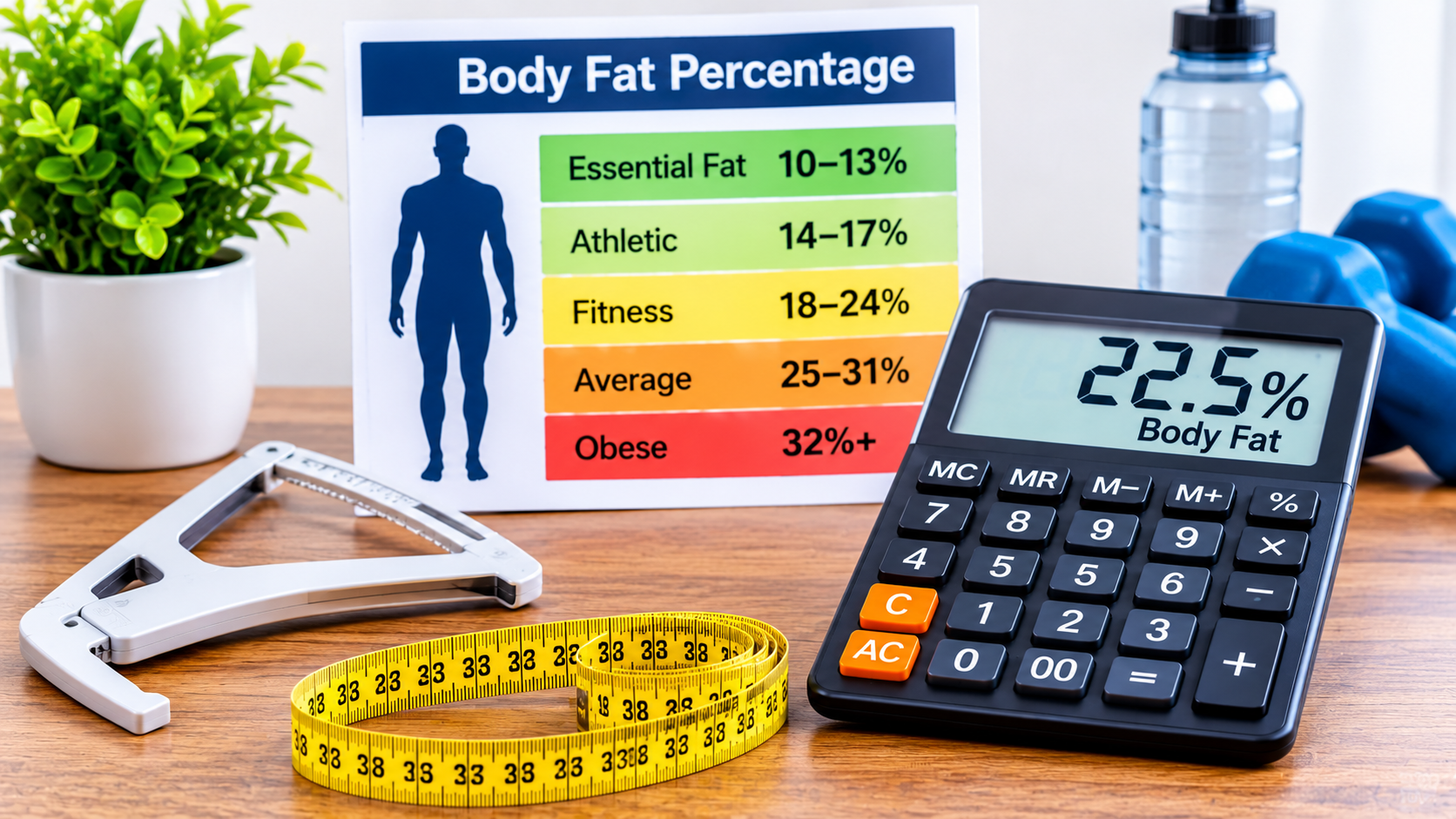
Understanding Healthy Body Fat Percentage Ranges
Body fat percentage varies naturally between individuals. Biological , age, genetics, hormones, and physical activity all influence typical body composition.
Women generally have higher essential body fat requirements than men because body fat plays important roles in reproductive and hormonal functions.
Athletes may have different body composition profiles depending on their sport. Endurance athletes, strength athletes, and recreational fitness enthusiasts can have different physical requirements.
There is no single body fat percentage that is ideal for everyone.
When interpreting a body fat estimate, consider:
Age and individual health circumstances.
Biological and physiological requirements.
Physical activity and training history.
Muscle mass and fat distribution.
The measurement method used.
Changes over time rather than one isolated reading.
Extremely low body fat can be associated with inadequate energy availability and other health concerns. Similarly, excess body fat, especially around the abdomen, may increase certain health risks.
For a meaningful assessment, body fat percentage should be considered alongside waist circumference, blood pressure, metabolic health, and other relevant indicators.
Factors That Affect Body Fat Calculation Accuracy
The accuracy of a body fat estimate depends on the measurement technique and the quality of the information entered.
Several factors can influence the results.
Measurement Errors: Incorrect waist, neck, hip, or height measurements can produce inaccurate calculations.
Hydration Levels: Changes in body water can influence bioelectrical impedance measurements and body weight.
Recent Exercise: Physical activity can temporarily affect hydration, circulation, and fluid distribution.
Food Intake: Eating or drinking shortly before testing may affect some measurement methods.
Body Fat Distribution: Individuals store fat differently. Two people with similar measurements may have different actual body composition.
Age and Muscle Mass: Formula-based estimates may be less reliable in older adults and individuals with unusually high or low muscle mass.
Equipment Differences: Different scales and professional devices may produce different estimates.
To improve consistency, take measurements under similar conditions, preferably at the same time of day. Avoid comparing results from different measurement methods as though they were directly interchangeable.
How to Track and Improve Body Composition
Improving body composition generally involves maintaining sustainable habits that support muscle development, healthy nutrition, and appropriate energy balance.
A combination of resistance training, cardiovascular activity, adequate nutrition, and recovery can support long-term fitness goals.
Resistance Training: Exercises such as squats, push-ups, rows, and weight training help develop and maintain muscle mass.
Balanced Nutrition: Eating a varied diet with adequate protein, vegetables, fruits, whole grains, and healthy fats supports overall health and physical performance.
Regular Physical Activity: Walking, cycling, swimming, and other aerobic activities support cardiovascular fitness and energy expenditure.
Sleep and Recovery: Adequate sleep and recovery allow the body to adapt to exercise and maintain normal physiological functions.
Consistent Monitoring: Record body weight, waist circumference, and body fat estimates under similar conditions to evaluate longer-term changes.
Avoid extreme dieting or attempting to achieve unusually low body fat levels. Rapid weight-loss methods may result in muscle loss, nutritional deficiencies, and other health problems.
If you have medical conditions, a history of disordered eating, or concerns about your body composition, consult a qualified healthcare professional or registered dietitian before making significant changes.
Conclusion
A Body Fat Calculator provides a convenient way to estimate body fat percentage and understand body composition beyond basic weight measurements. By using information such as age, height, weight, and body circumferences, it can provide an approximate indication of how much of your body weight consists of fat.
Different calculation methods offer different levels of detail and accuracy. BMI-based equations and circumference measurements are convenient for home use, while DEXA scans, skinfold assessments, and other professional techniques provide alternative ways to evaluate body composition.
When interpreting results, consider individual characteristics, measurement limitations, and long-term trends. A single body fat percentage should never be treated as a complete measure of health or fitness.
Combining consistent measurements with balanced nutrition, regular physical activity, resistance training, and sufficient recovery provides a more useful approach to monitoring body composition.
Using a Body Fat Calculator regularly under consistent conditions can help you understand changes over time and make more informed decisions about your fitness goals.
FAQS
What is a Body Fat Calculator?
A Body Fat Calculator is an online tool that estimates the percentage of your total body weight made up of fat using measurements such as height, weight, age, and body circumferences.
How do I calculate my body fat percentage?
You can estimate body fat percentage using BMI-based equations, circumference measurements, or specialised body composition testing. An online calculator can simplify the process by applying the selected formula to your measurements.
What information is required for a Body Fat Calculator?
Depending on the method, you may need your age, biological , height, weight, waist circumference, neck circumference, and hip circumference.
What is the formula for body fat percentage?
One commonly used adult estimation equation is:
Body Fat % = (1.20 × BMI) + (0.23 × Age) − (10.8 × ) − 5.4.
This particular formula uses 1 for male and 0 for female and provides an estimate rather than a direct measurement.
What is the difference between BMI and body fat percentage?
BMI measures weight relative to height, while body fat percentage estimates the proportion of body weight consisting of fat. BMI does not distinguish between muscle and fat.
What is a healthy body fat percentage?
Healthy body fat levels vary according to age, , genetics, physical activity, and individual health circumstances. There is no single ideal percentage suitable for everyone.
How accurate are online body fat calculators?
Online calculators provide estimates rather than exact measurements. Accuracy depends on the formula, measurement technique, and individual body composition.
What is the US Navy body fat method?
The US Navy method estimates body fat percentage using height and specific circumference measurements. It generally uses neck and abdomen measurements for men and neck, waist, and hip measurements for women.
Can I calculate body fat percentage without special equipment?
Yes. Some calculators use height, weight, and age, while circumference-based methods require only a flexible measuring tape. However, these methods provide estimates rather than direct measurements.
What is lean body mass?
Lean body mass represents the body's total weight excluding fat mass. It includes muscles, bones, organs, water, and other non-fat tissues.
Does muscle affect body fat percentage?
Yes. Muscle contributes to lean body mass. Two people with the same body weight can have different body fat percentages because their proportions of muscle and fat differ.
How often should I measure body fat percentage?
For general fitness tracking, measuring every few weeks or once a month can be sufficient. Use the same method and similar measurement conditions to make comparisons more meaningful.
Which body fat measurement method is most accurate?
DEXA is a widely used method for detailed body composition assessment, but it is not error-free. Results from DEXA, skinfold measurements, BIA, and other methods can differ depending on equipment and testing conditions.
Can body fat percentage change without weight changing?
Yes. A person can lose fat and gain muscle while maintaining a similar total body weight. This is why body composition measurements can provide information that weight alone cannot.
Does a Body Fat Calculator work for everyone?
Not every formula is suitable for every individual. Some equations are intended for adults and may be less reliable for athletes, older adults, children, teenagers, and people with unusual body composition. Always check which population the selected method is designed for.